vimsynth/modules
69 modules
Every card below is a photograph of the real thing — the module added to an empty rack and drawn by vimsynth itself, knobs where they land by default. Pick one for its sockets, its knobs and what it is for.
j/k scroll · gg/G ends · Esc back to the splash · : for the command line
sources
They make a signal out of nothing — oscillators, noise, sample players, and the two doors the outside world comes in through.
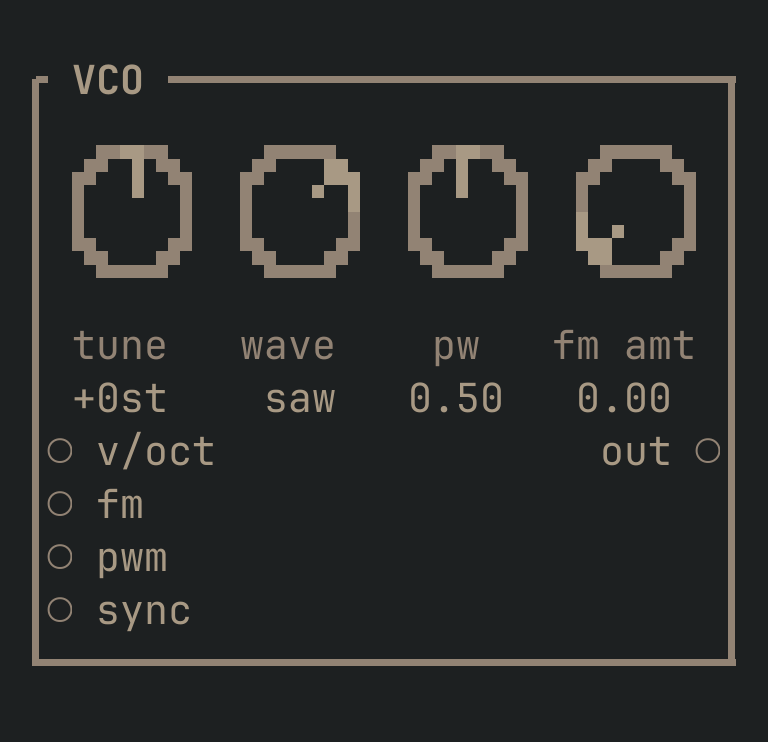 VCOThe main oscillator.
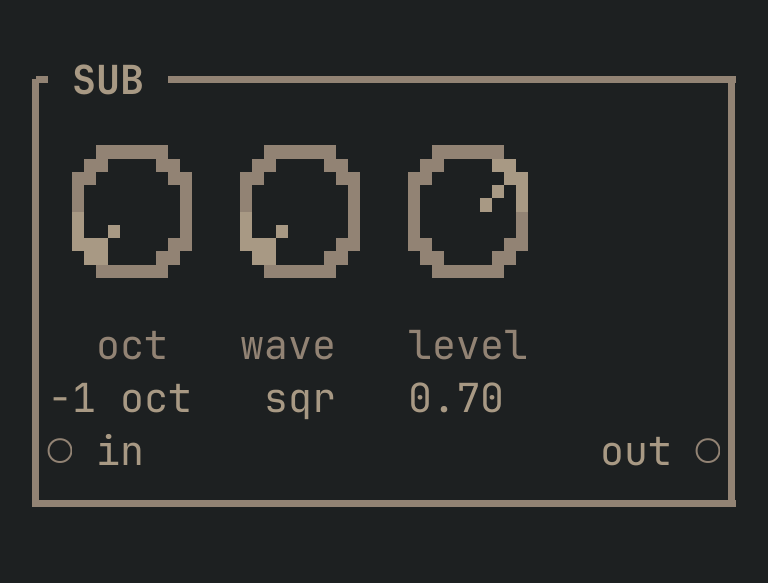 SUBA sub-oscillator an octave (or two) below whatever audio you feed it.
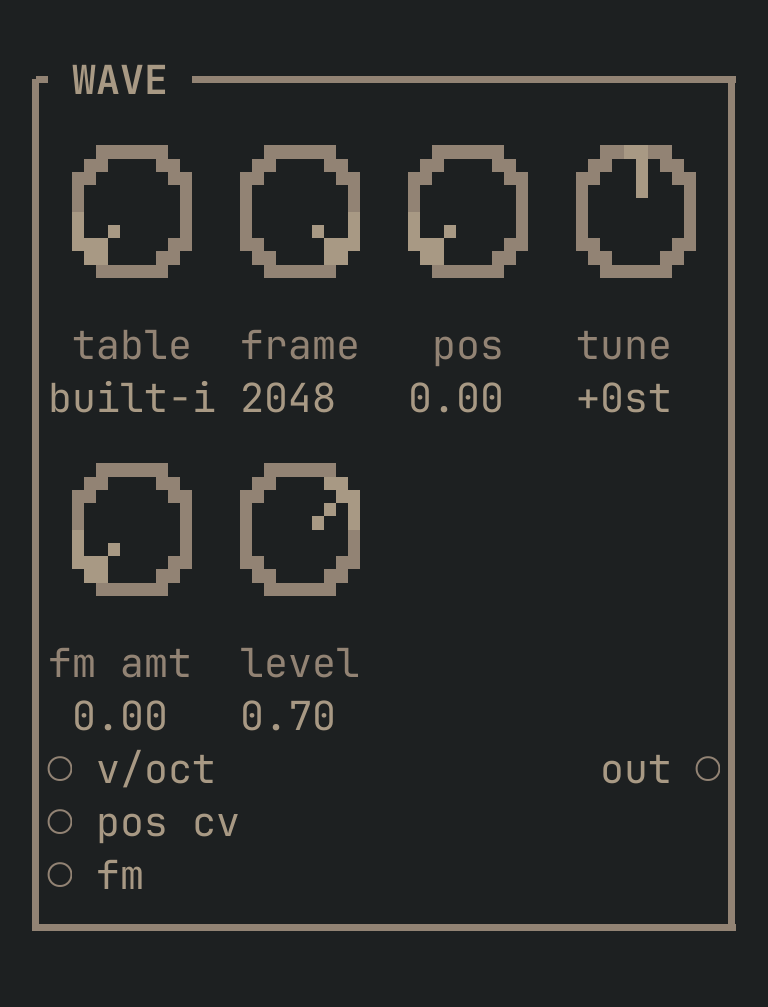 WAVEA wavetable oscillator.
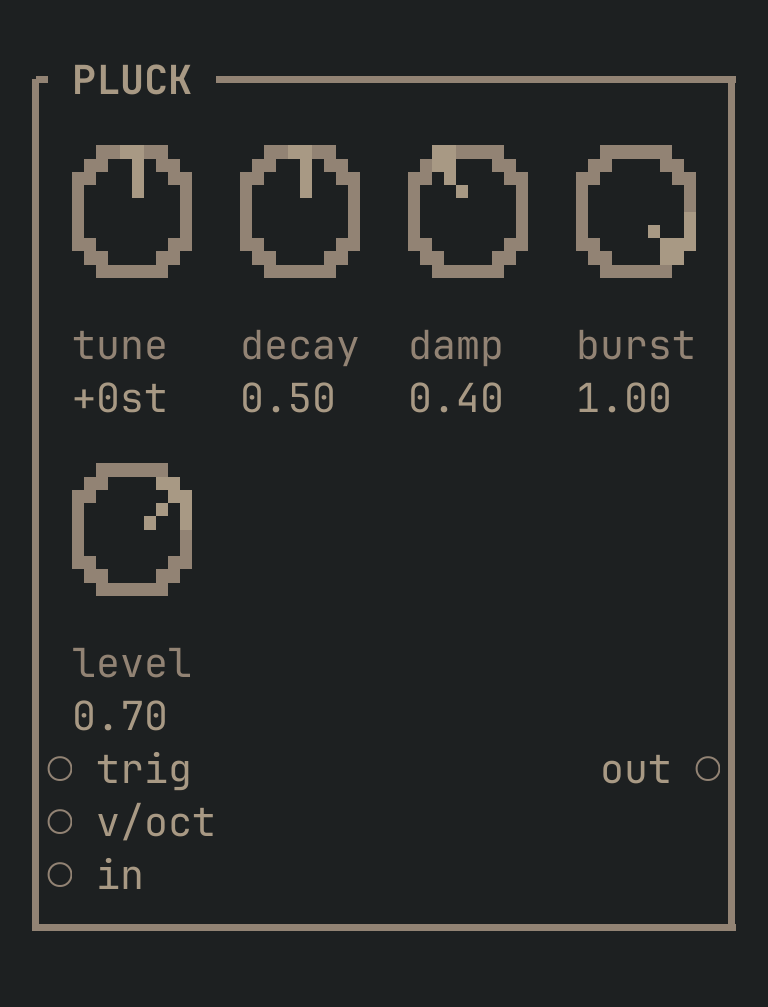 PLUCKA plucked string (Karplus-Strong).
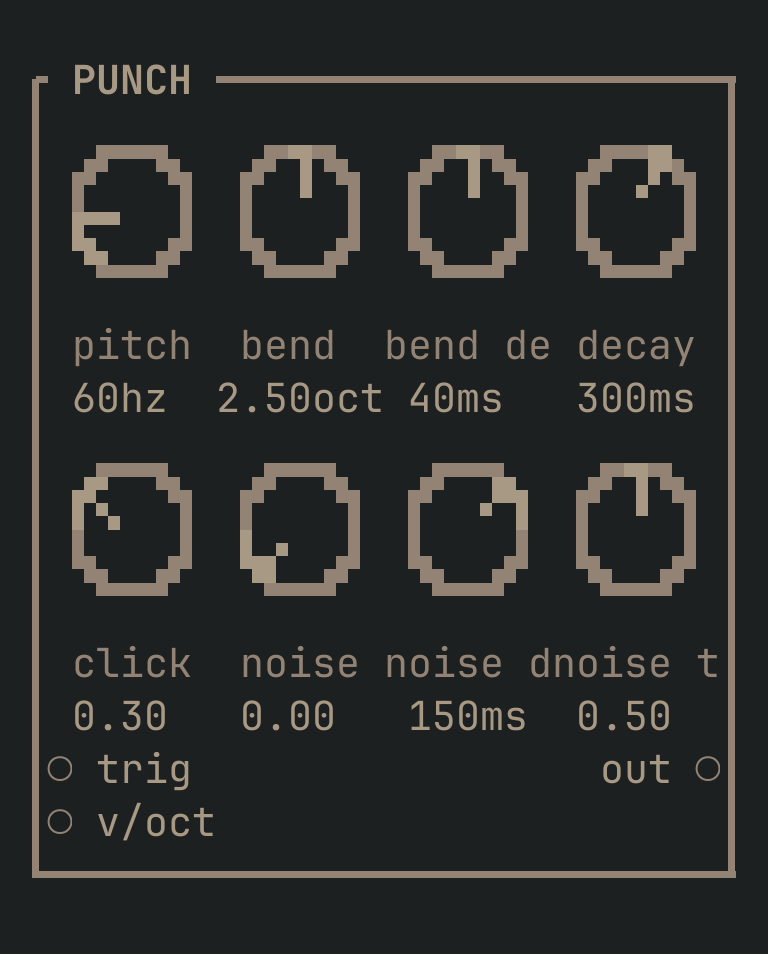 PUNCHA struck percussion voice — a kick, a snare, a hat, all the same card.
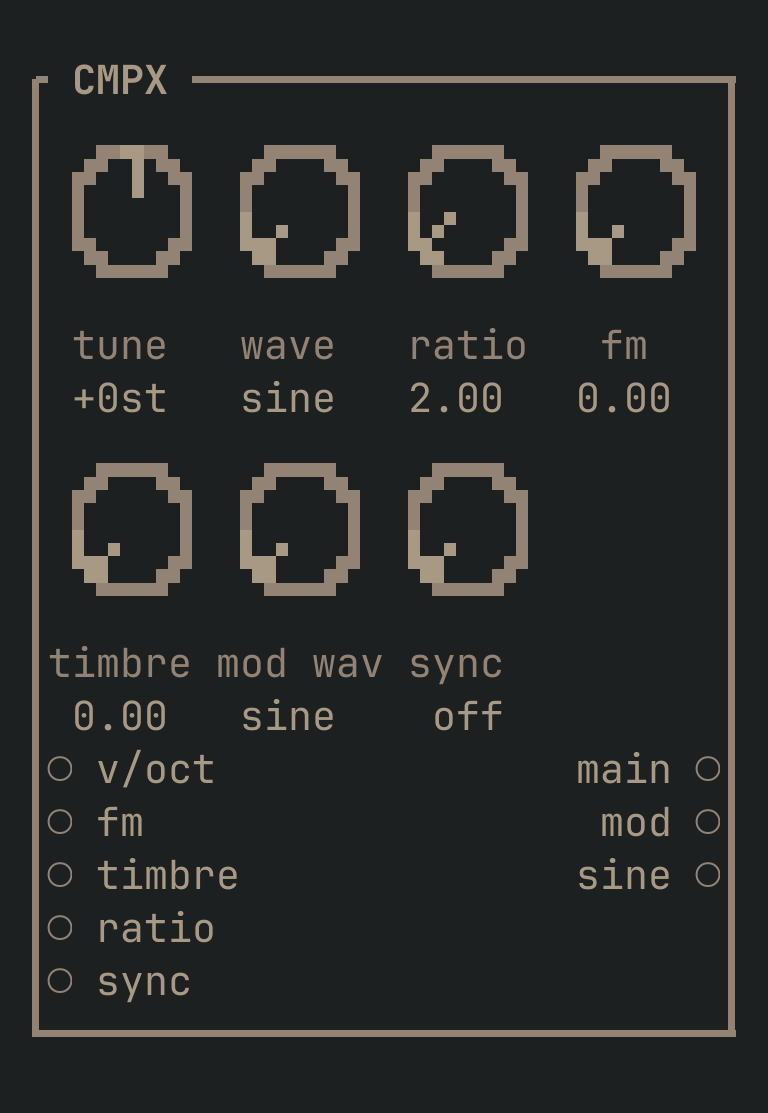 CMPXA complex oscillator: two operators in one card, wired the west-coast way.
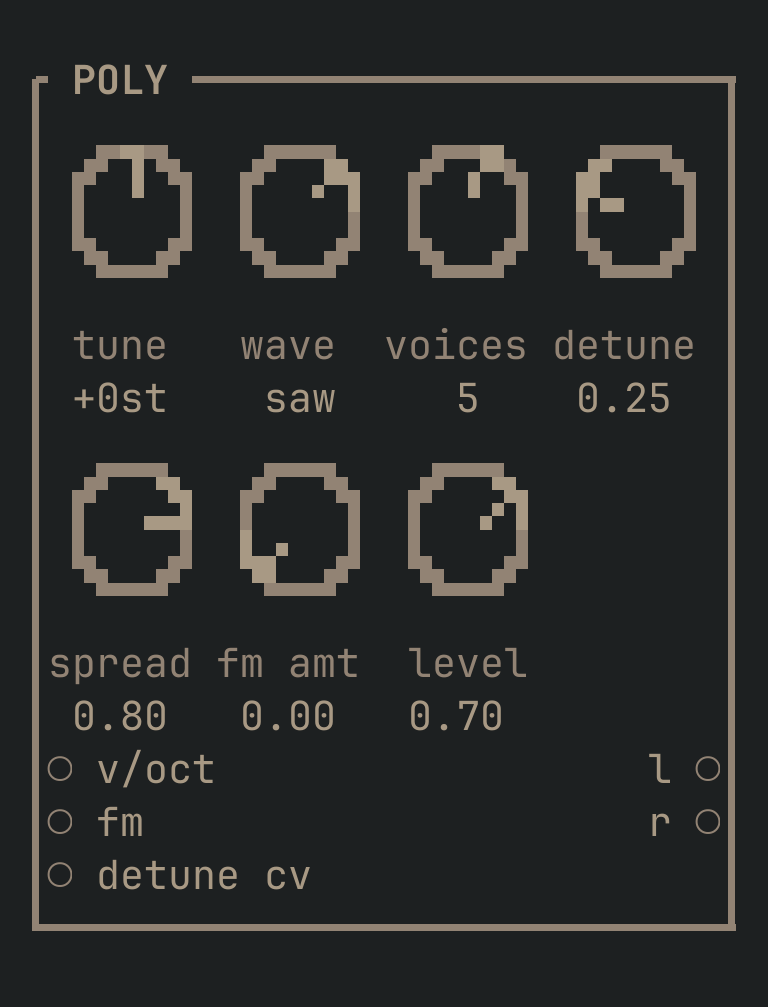 POLYA unison stack: several detuned copies of ONE voice, born stereo.
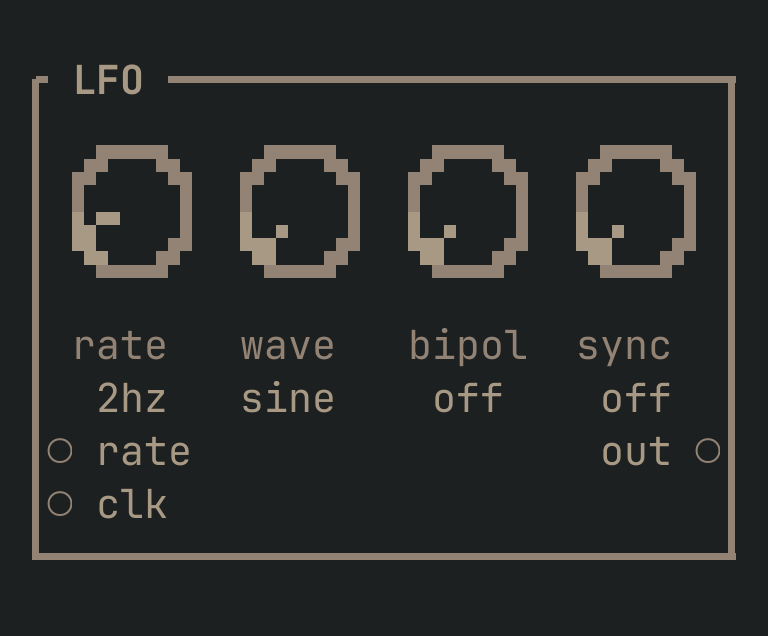 LFOA slow oscillator, for modulating things.
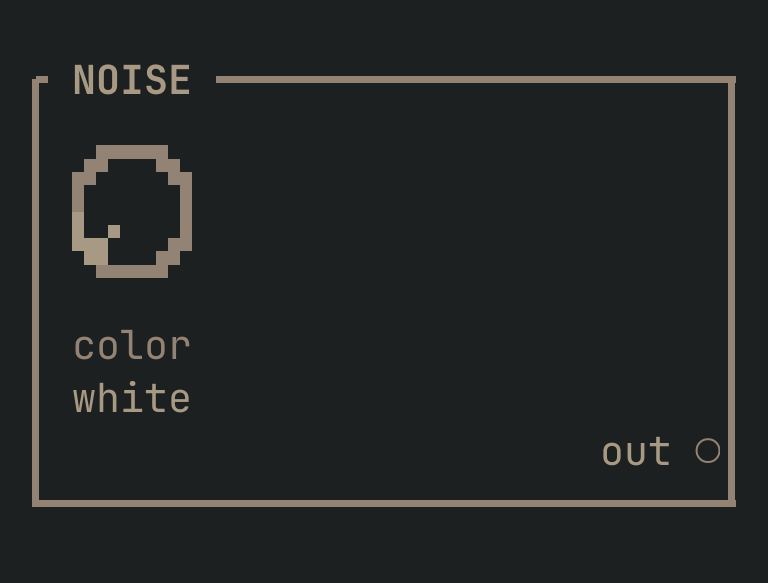 NOISEWhite or pink noise.
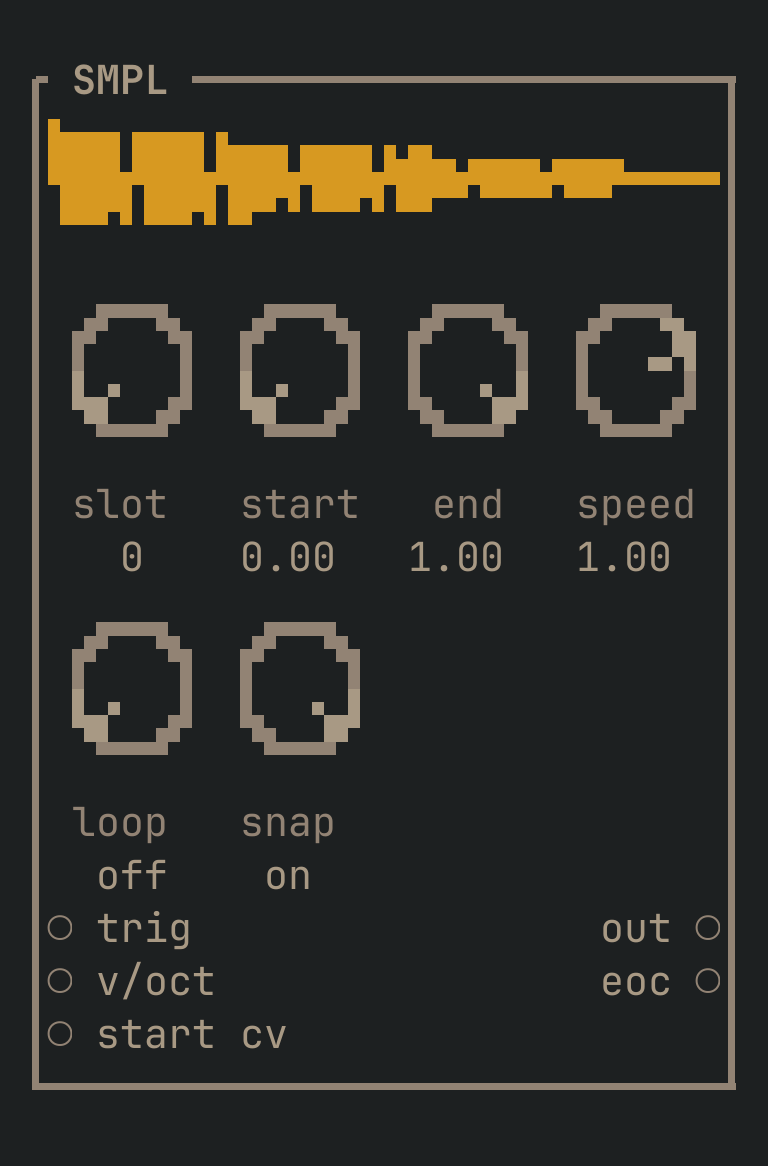 SMPLPlays a recording from a sample bank slot.
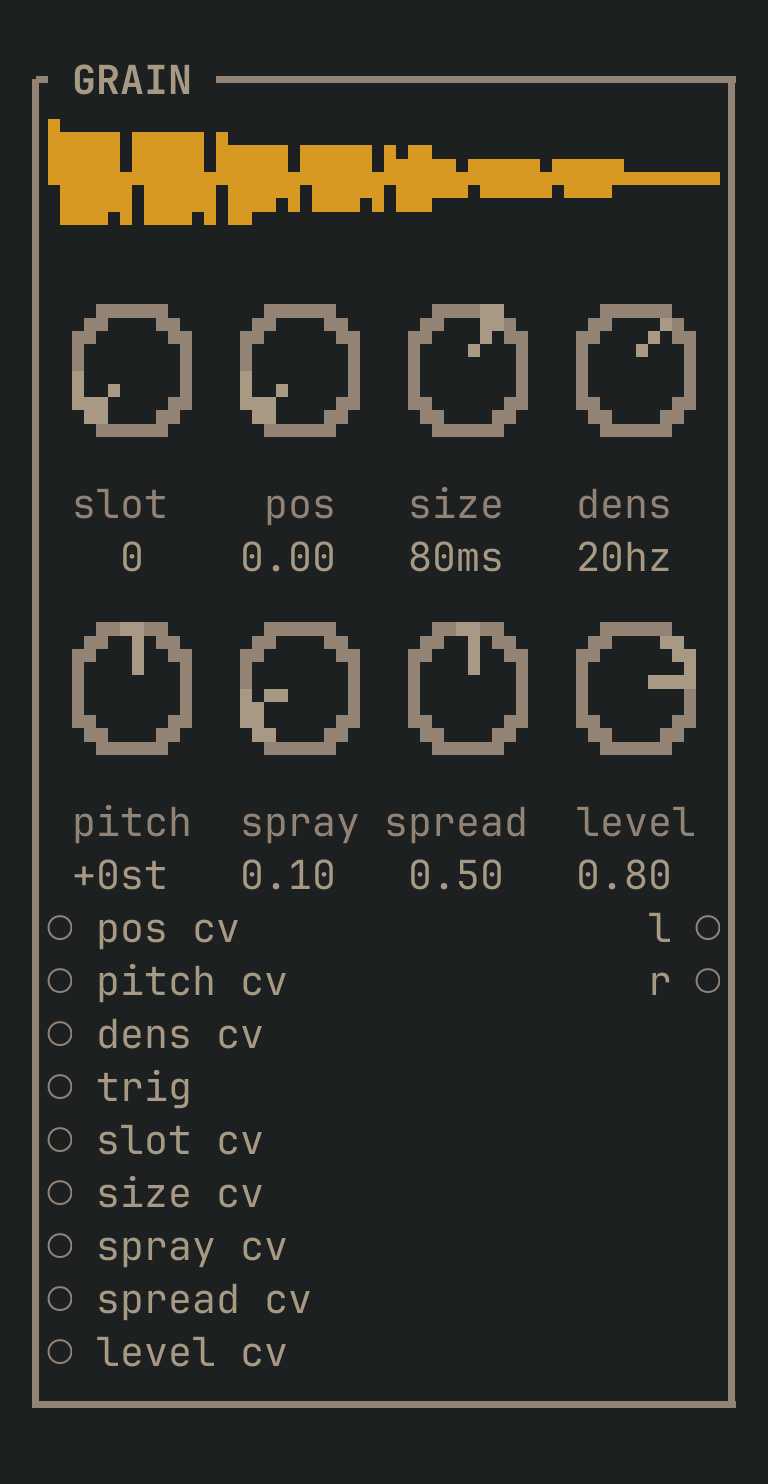 GRAINGranular synthesis: takes a recording apart into short windowed grains and scatters them into a cloud.
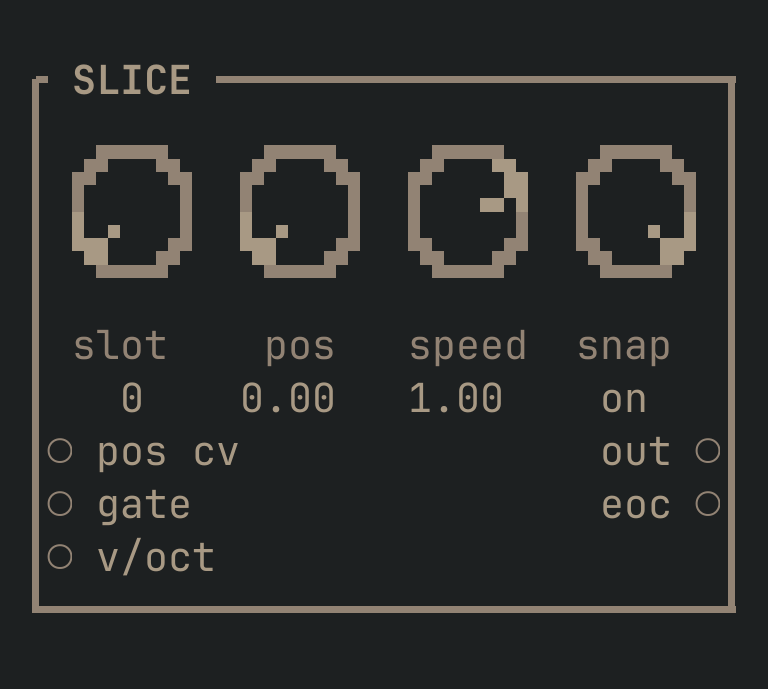 SLICEPlays one piece of a recording that has been cut into several, chosen by
 pos — a 0..1 CV, so a sequencer's own pitch/CV output can pick which slice fires, the way it would pick a note.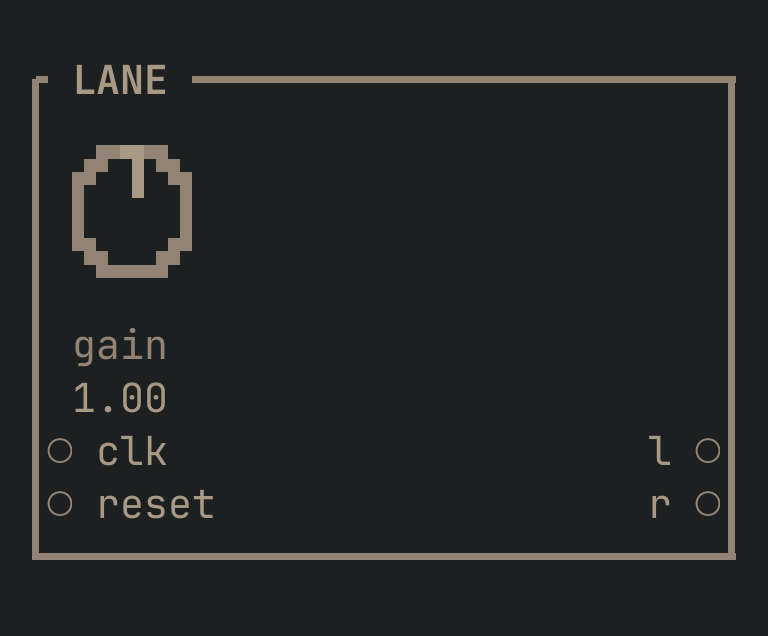 LANEOne lane of the ARRANGEMENT: many clips of recorded audio, laid out along a timeline and played in order.
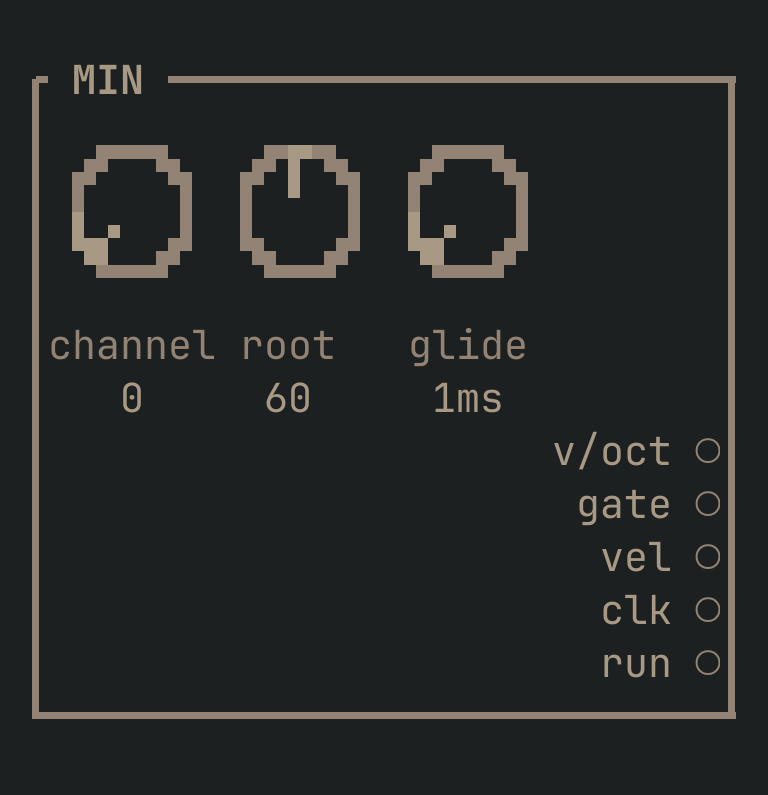 MINMIDI notes from a port or a DAW, as CV: a monophonic voice with last-note priority, emitting
 v/oct, gate and vel.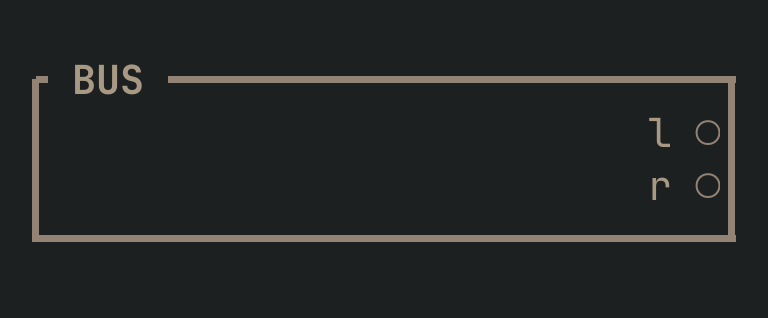 BUSTHE MASTER BUS, as something a cable can reach.
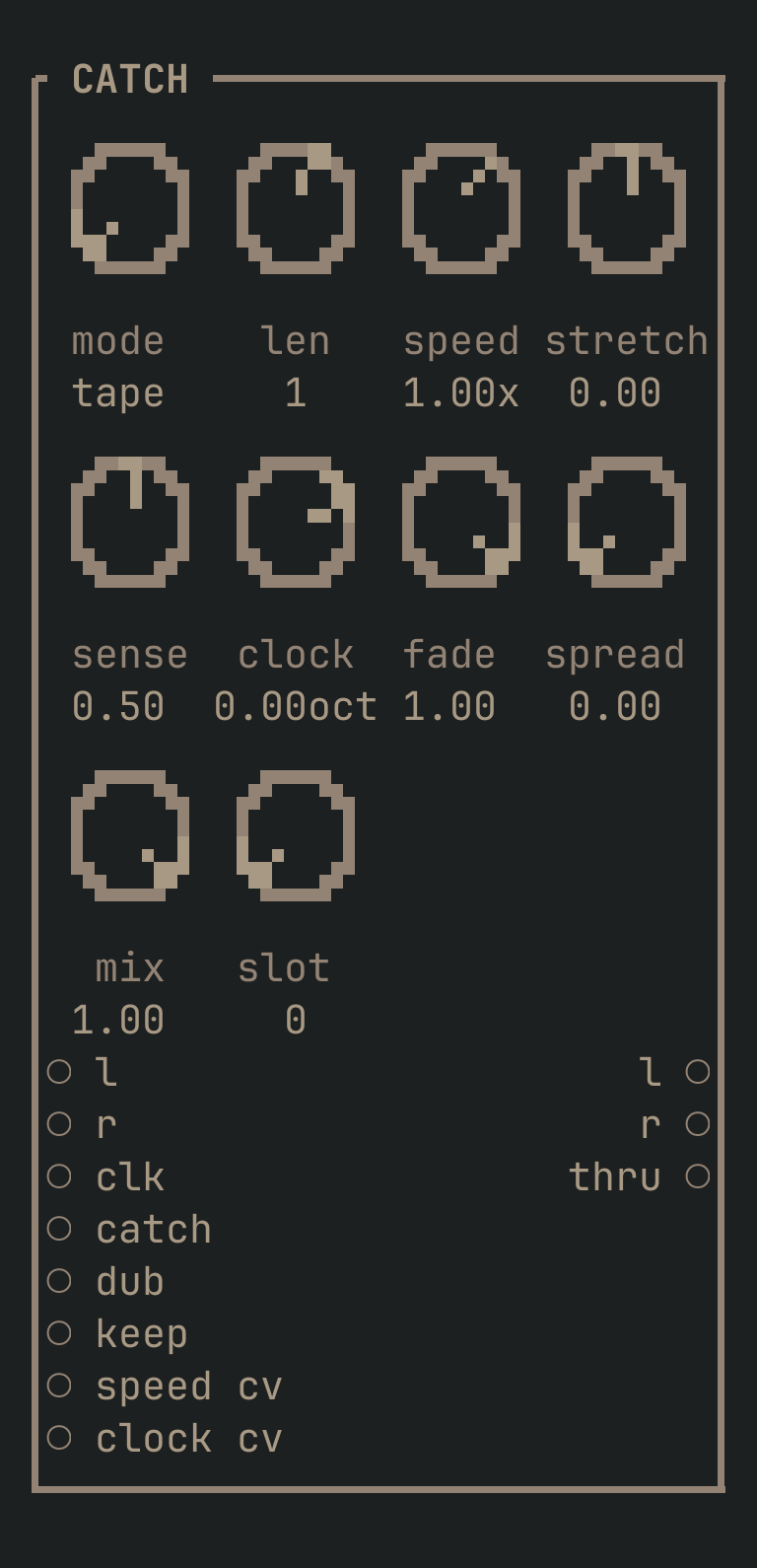 CATCHThe rack's SHORT-TERM MEMORY: a micro-looper with no start command.
processors
They take a signal and change it — filters, gates, distortion, and everything that works in time.
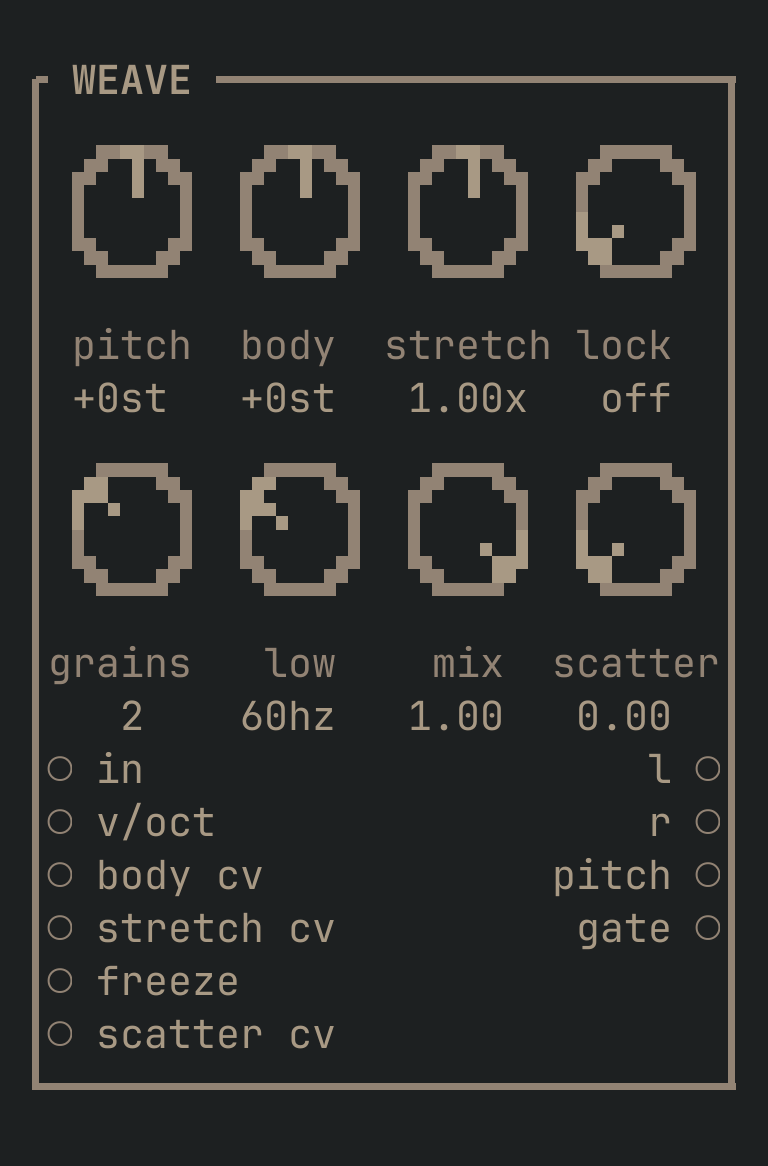 WEAVEGRANULAR CUT TO THE SOUND'S OWN PERIODS, not to a clock.
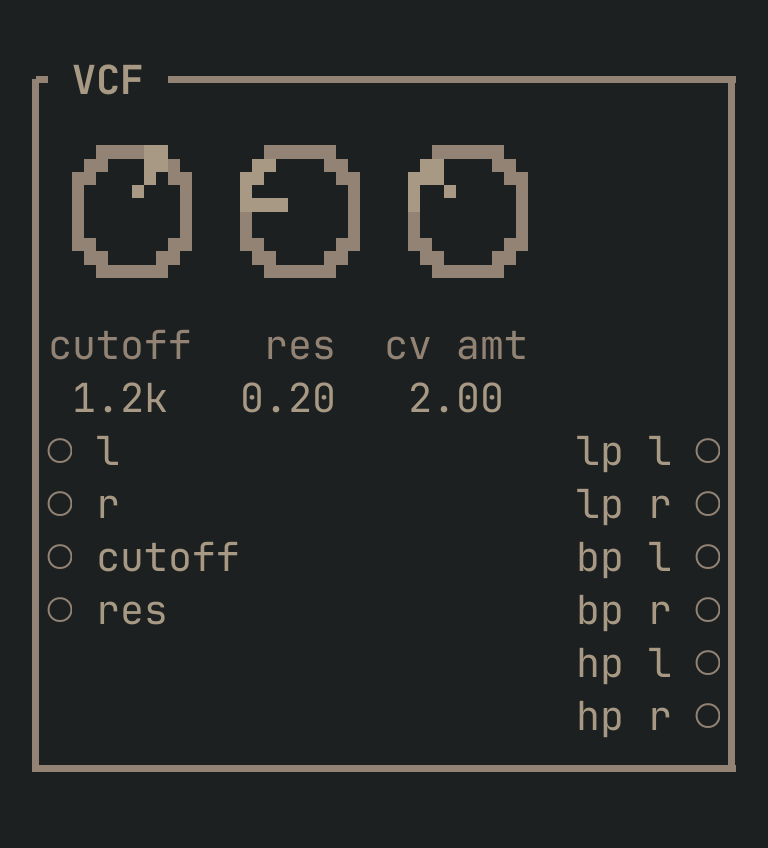 VCFResonant filter, state-variable.
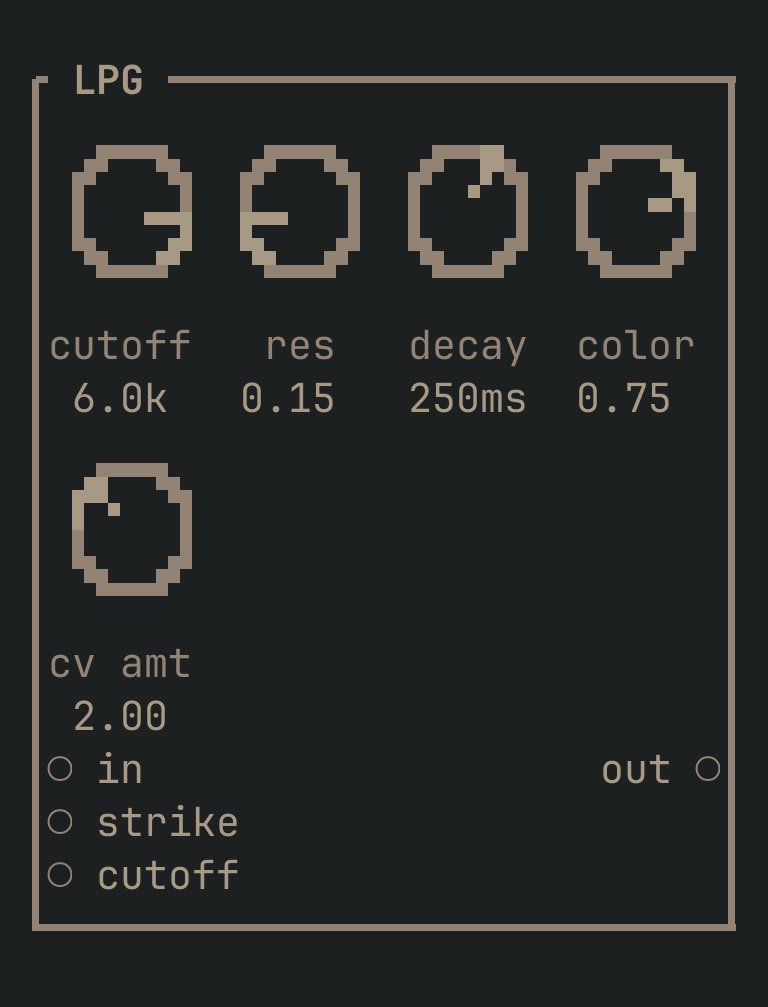 LPGA vactrol-style low-pass gate.
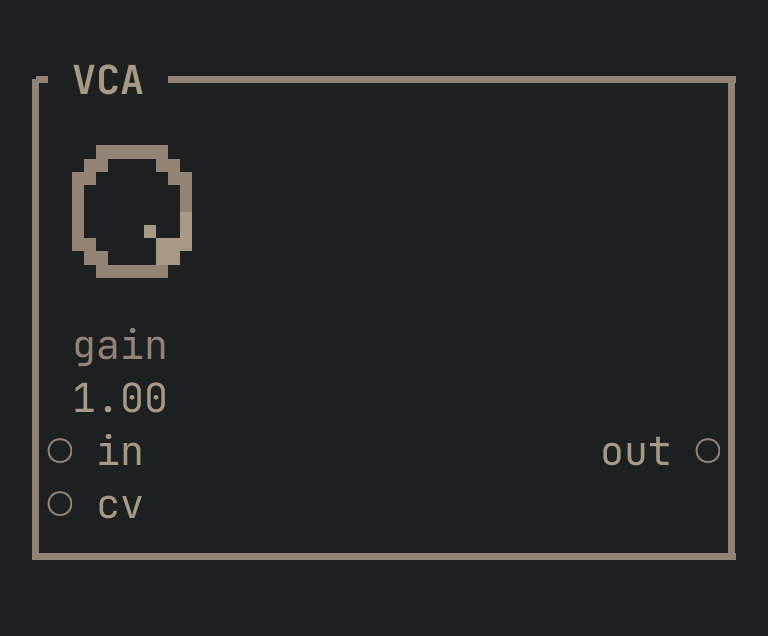 VCAAn amplifier.
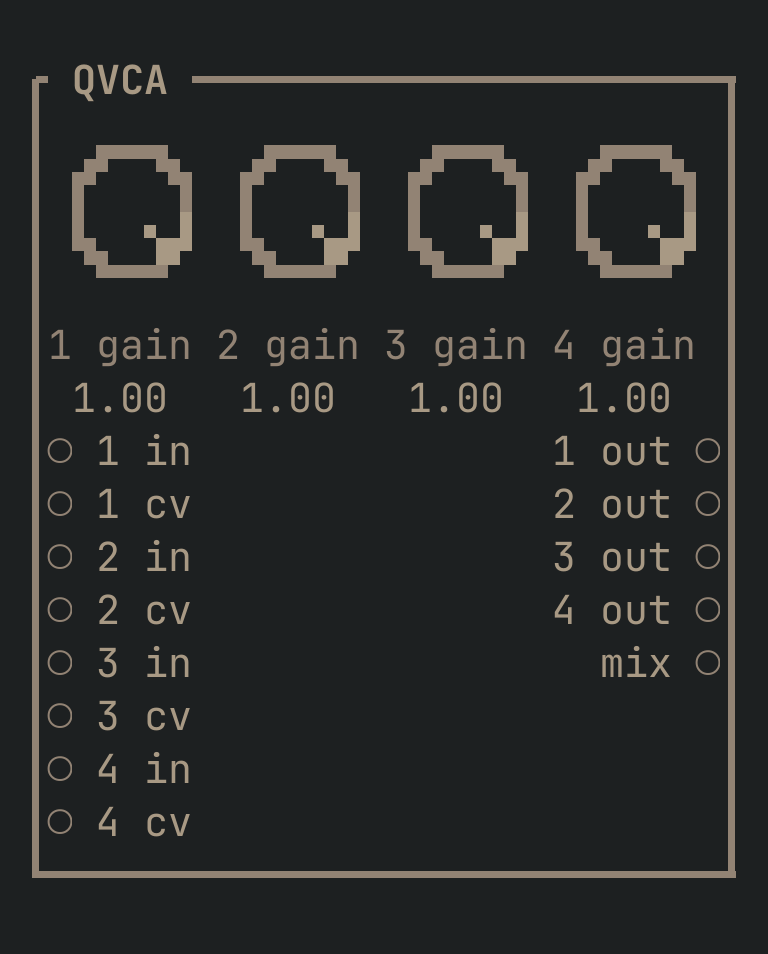 QVCAFour VCAs on one card, each with its own output and its own CV — a drum bus's four voices, each under its own envelope, without four separate cards.
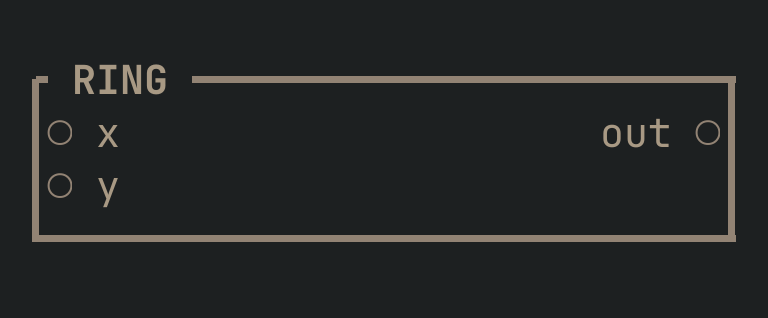 RINGFour-quadrant multiplier: x × y, signed.
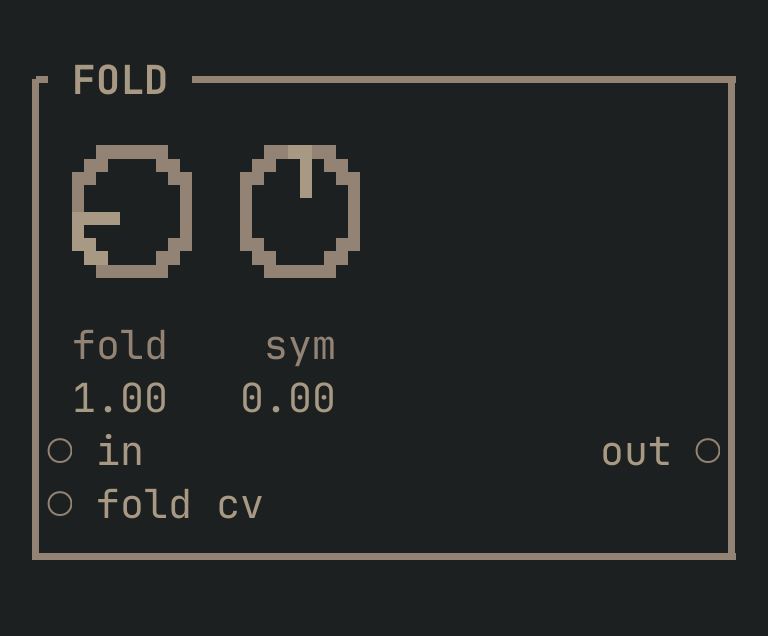 FOLDA wavefolder.
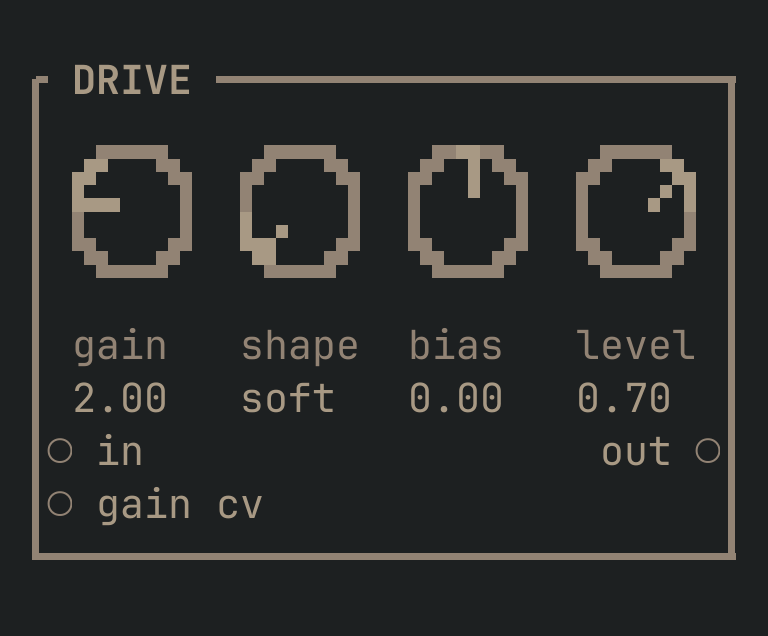 DRIVEGain, and overdrive.
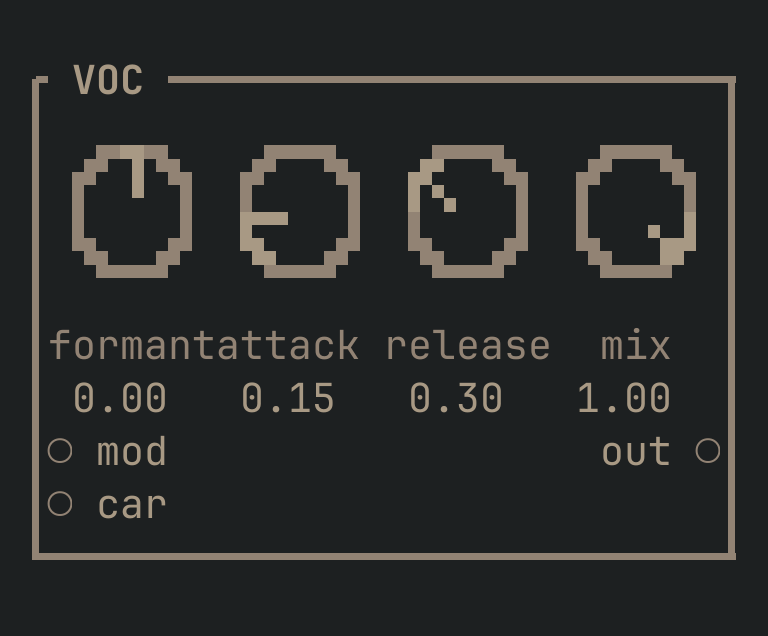 VOCA channel vocoder.
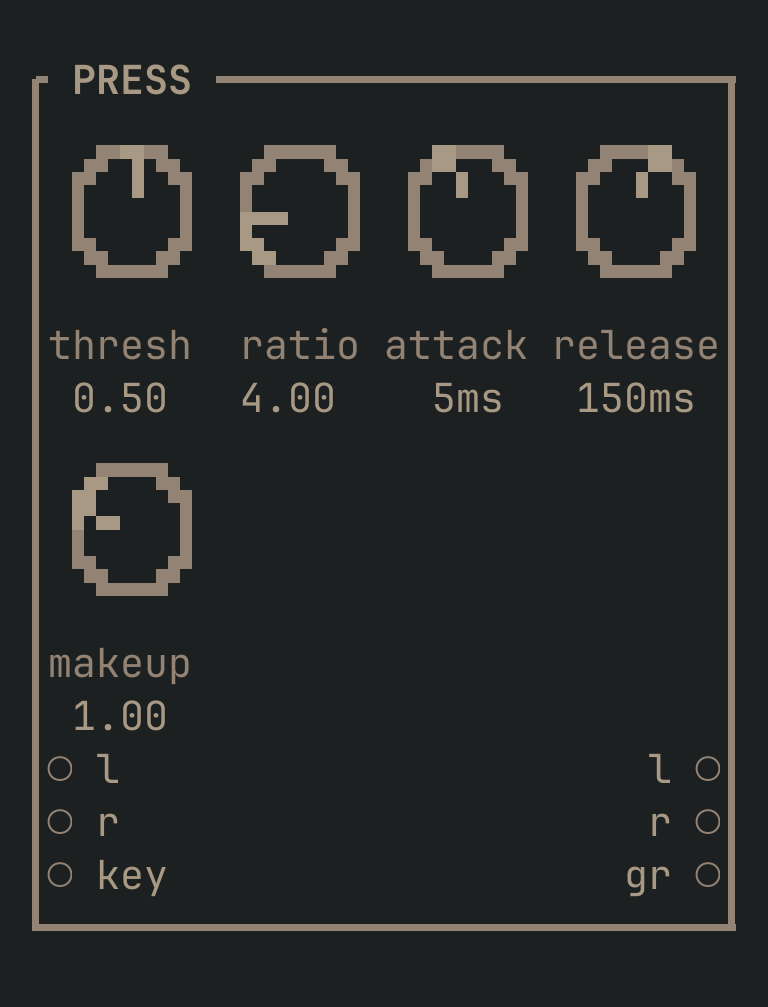 PRESSA compressor/limiter.
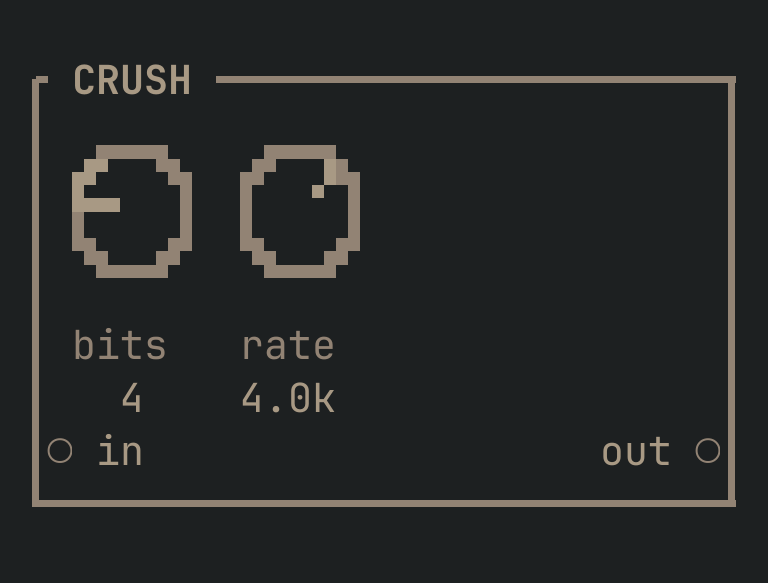 CRUSHA bitcrusher: throws away amplitude resolution (
bits) and time resolution (rate, a sample-and-hold at less than full speed) independently of each other.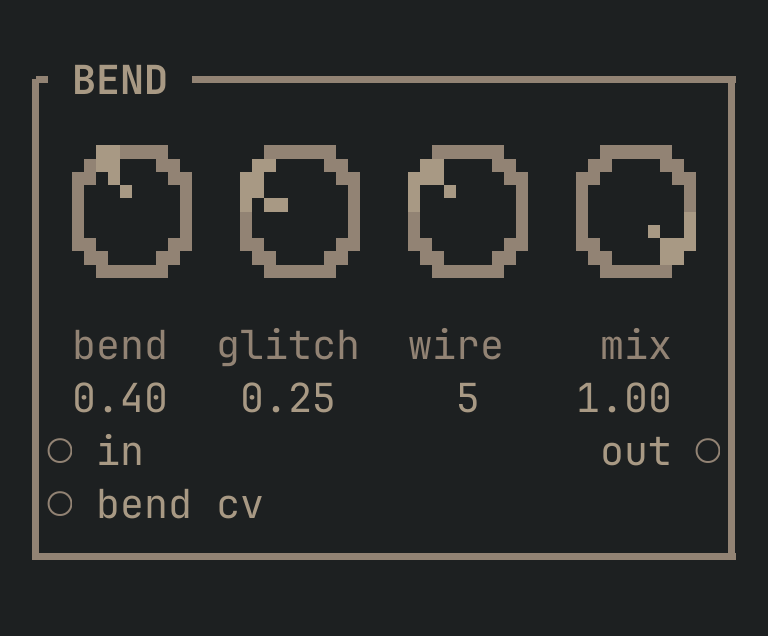 BENDA circuit bender: it CORRUPTS the incoming sound the way bridging two traces on a cheap digital toy does.
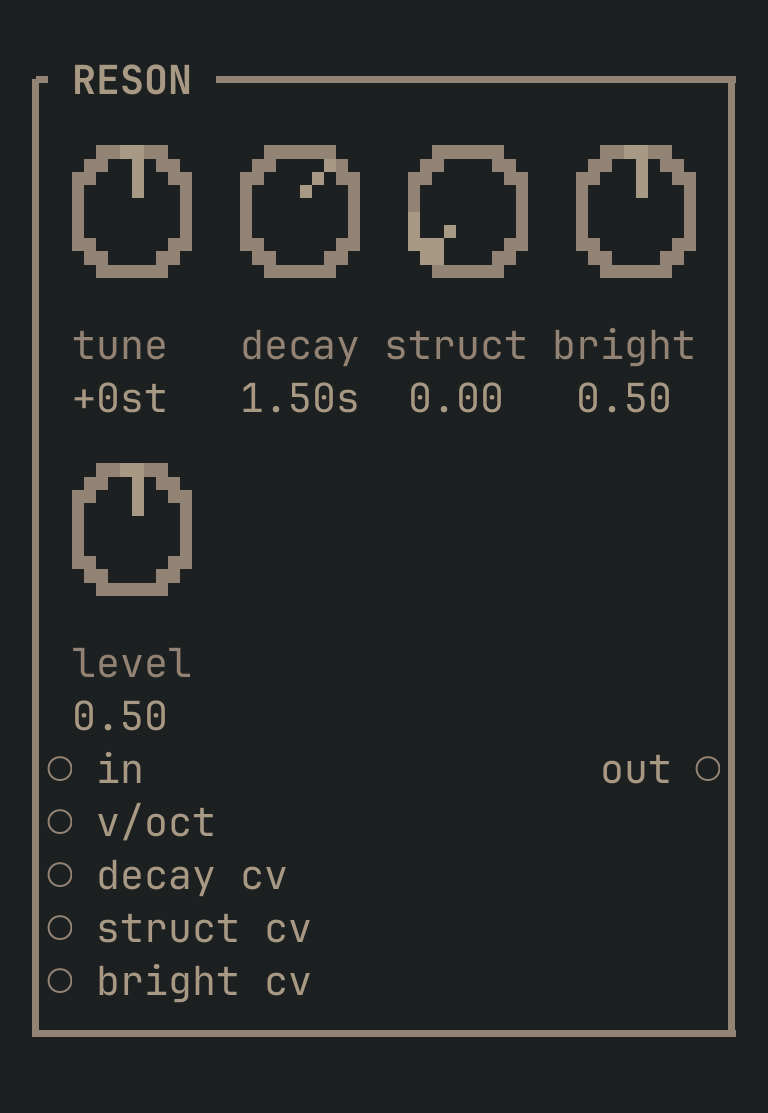 RESONA resonant BODY — modal synthesis.
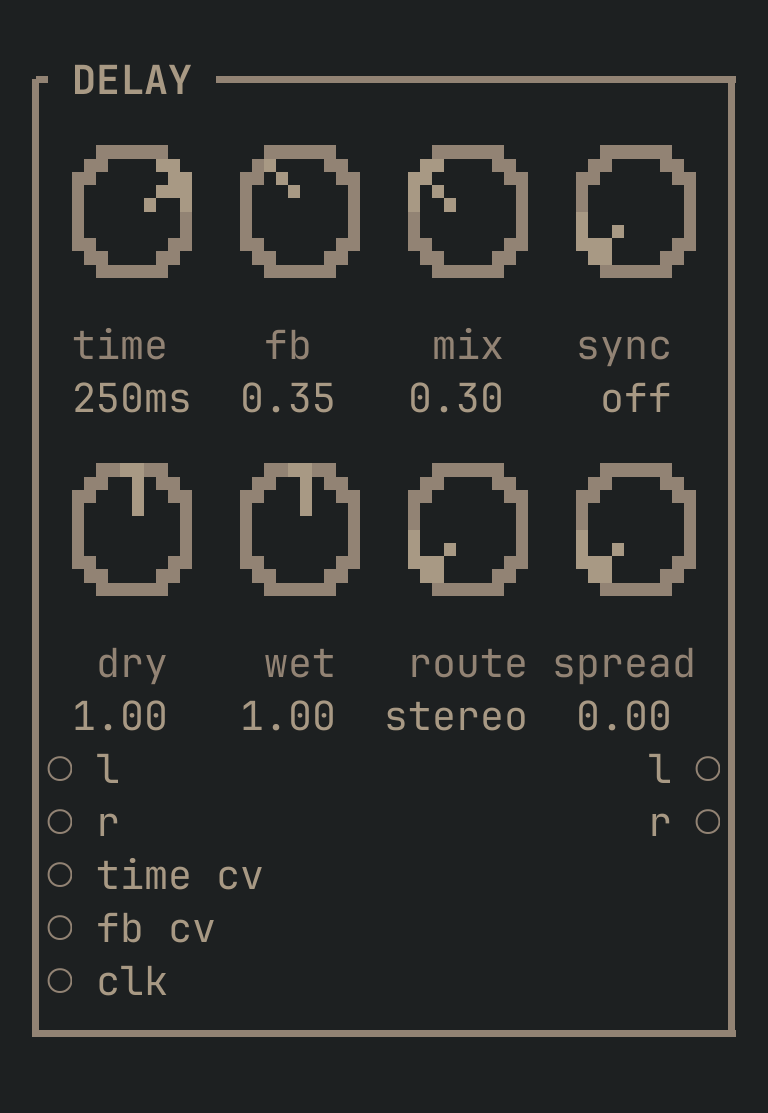 DELAYAn echo.
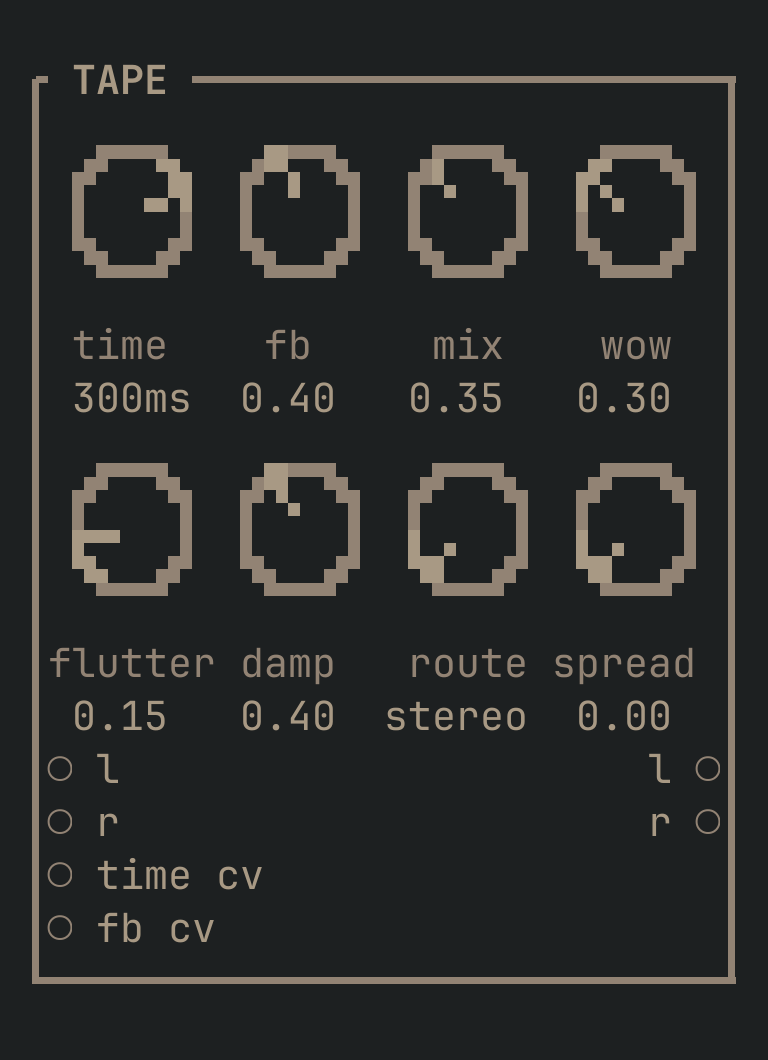 TAPEAn echo that wanders and darkens:
 wow bends the pitch slowly, flutter jitters it faster, damp takes a little top end off each repeat, and the feedback path saturates readily.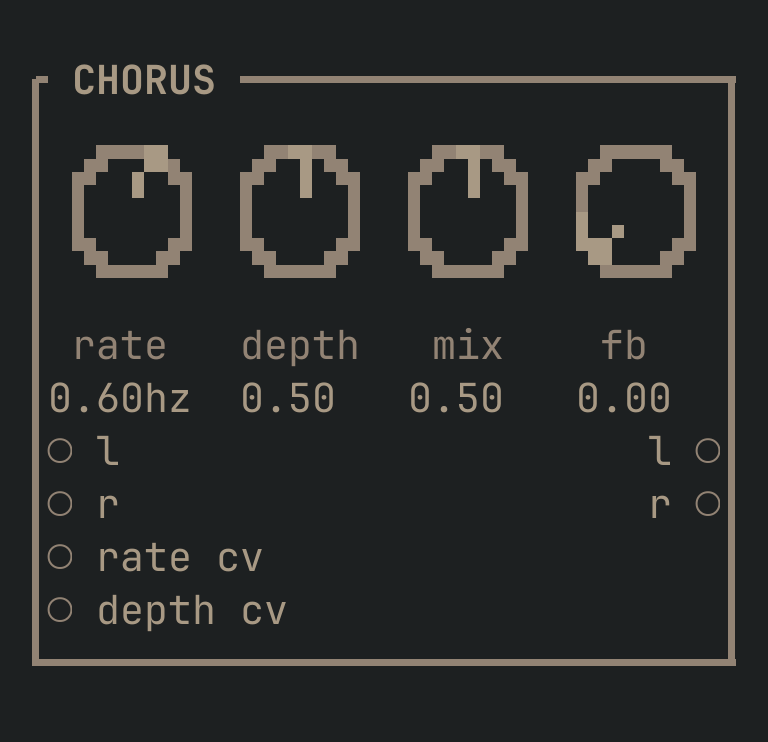 CHORUSOne voice heard as several: a short swept delay, detuned by the sweep.
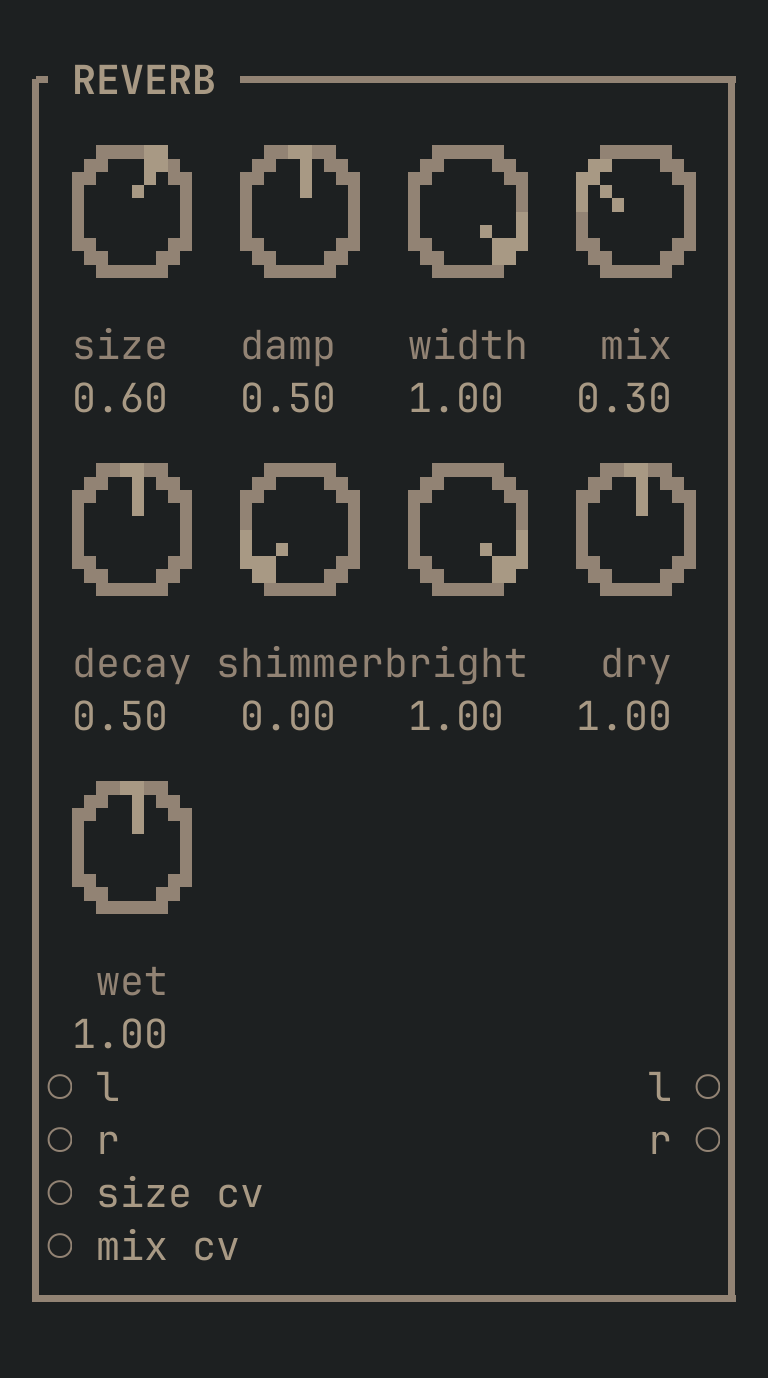 REVERBA room around the sound.
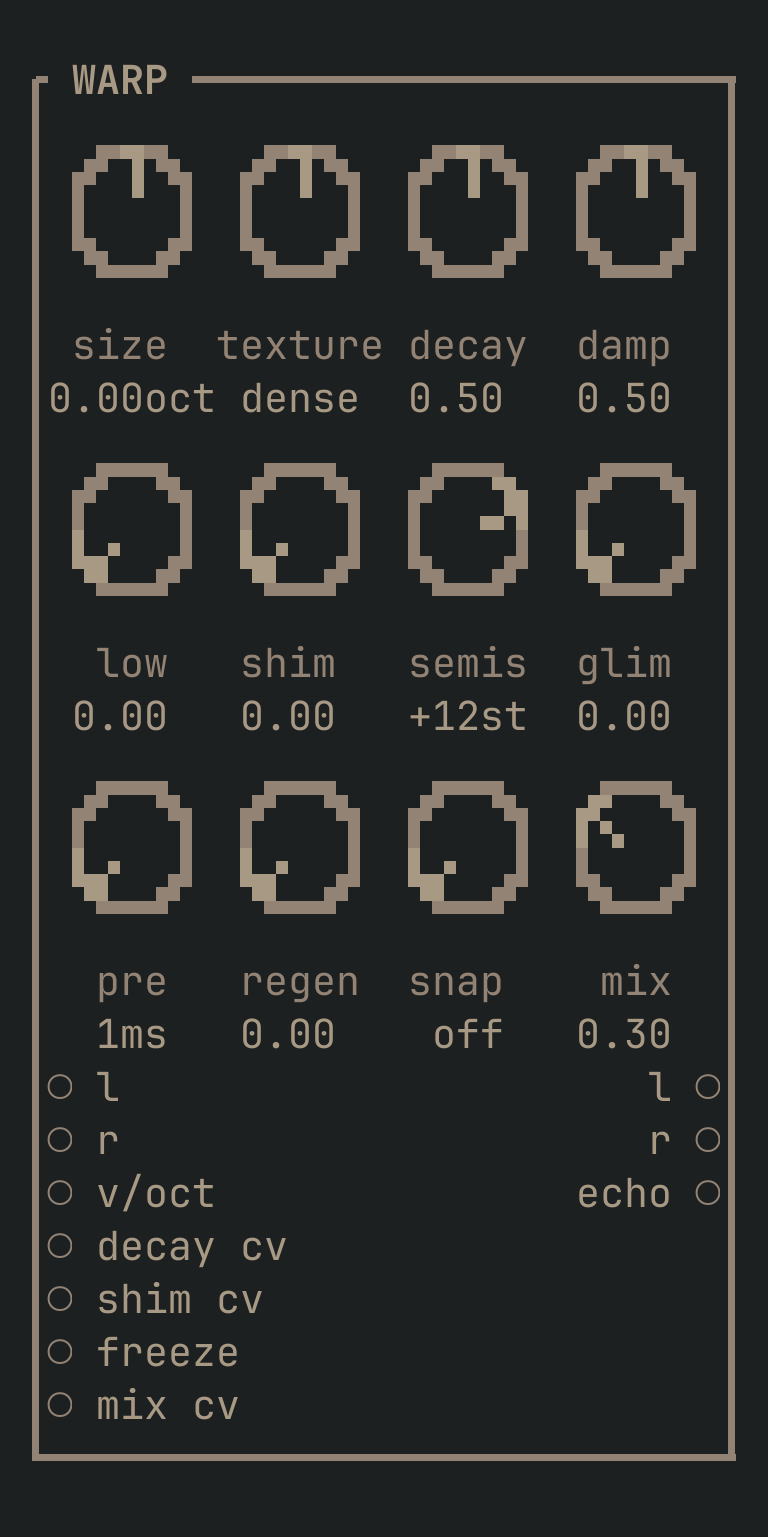 WARPA reverb whose TANK IS SCALED BY ONE RATE, in octaves, with a 1 v/oct input under it.
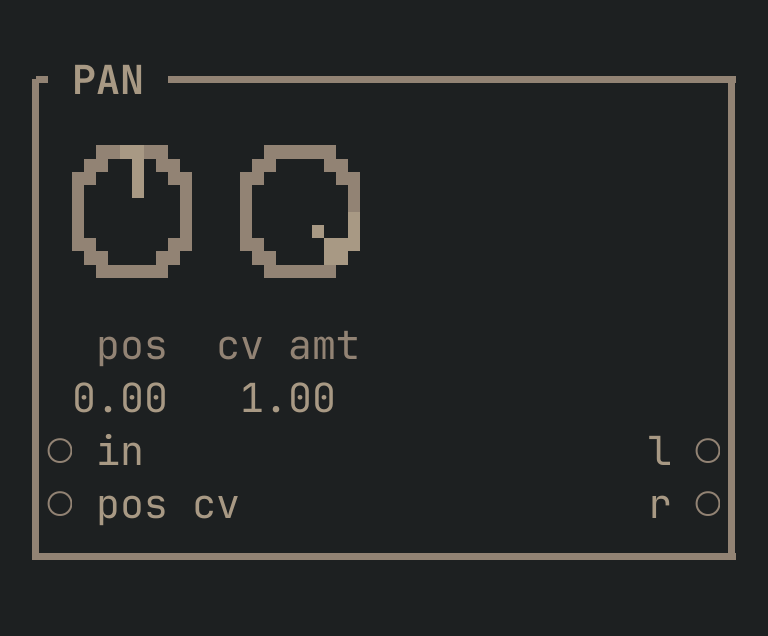 PANPlaces a mono sound in the stereo field, at constant power so it does not dip in the middle.
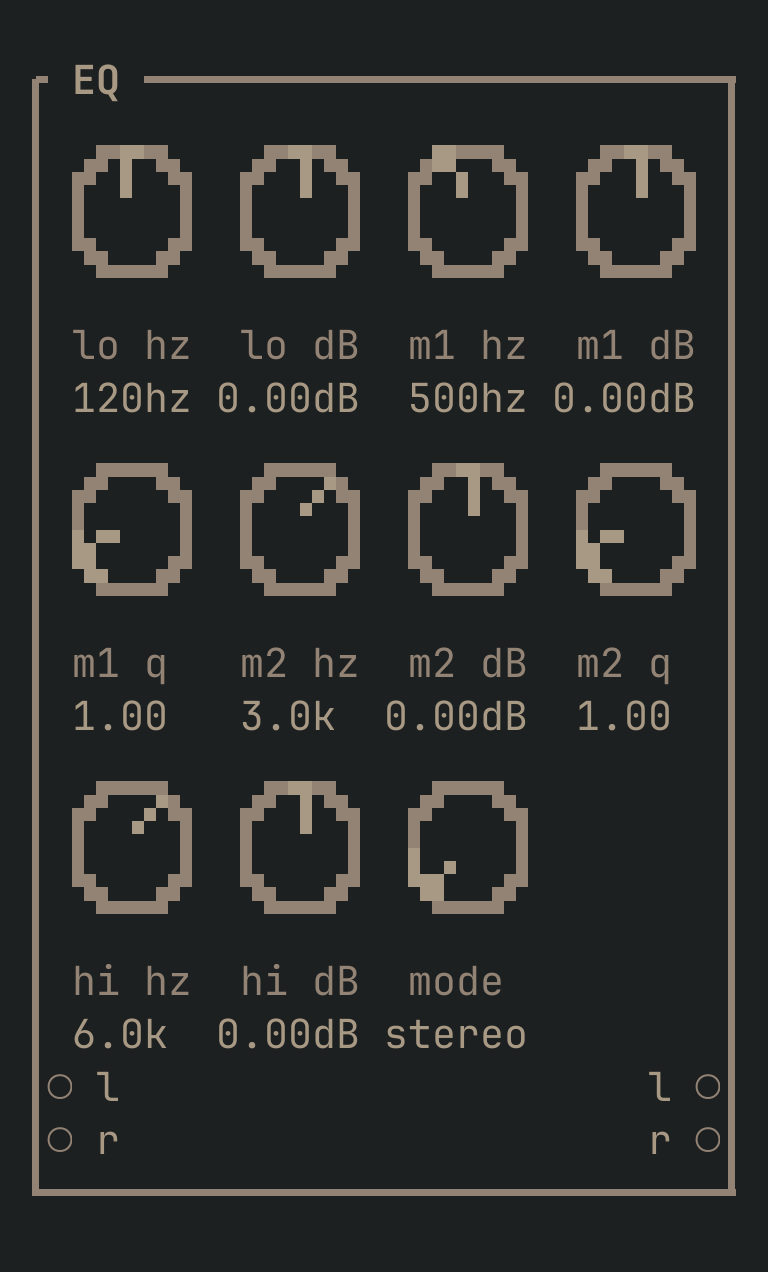 EQA four-band equaliser for a stereo BUS — a low shelf, two sweepable bells with their own width, and a high shelf.
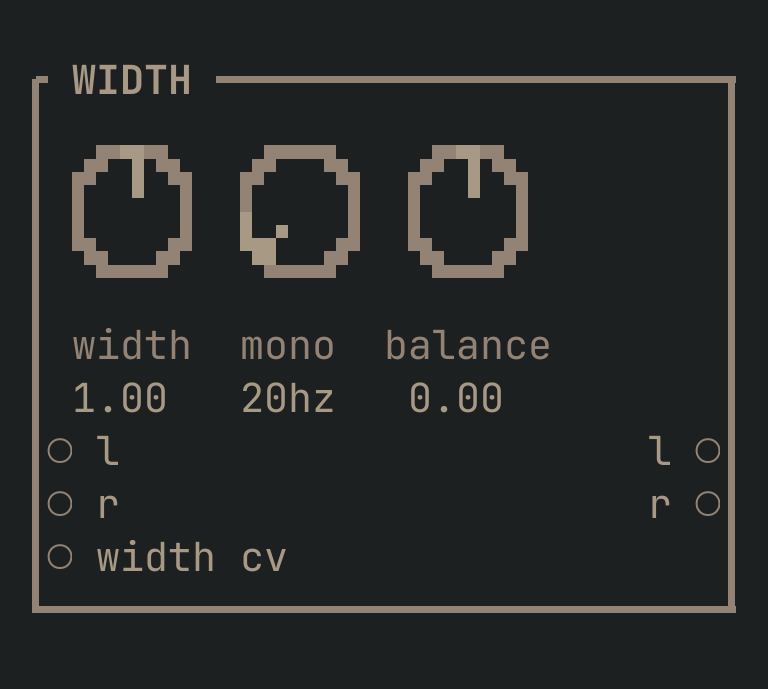 WIDTHStereo width, in mid/side.
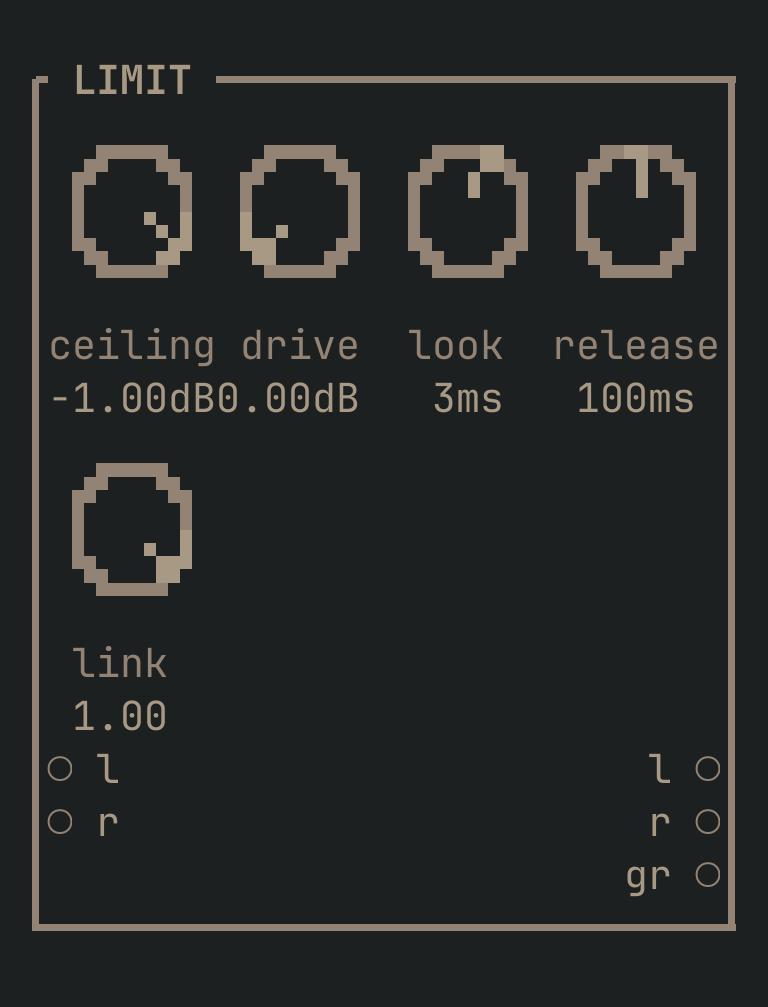 LIMITA brickwall LIMITER — the end of a mastering chain.
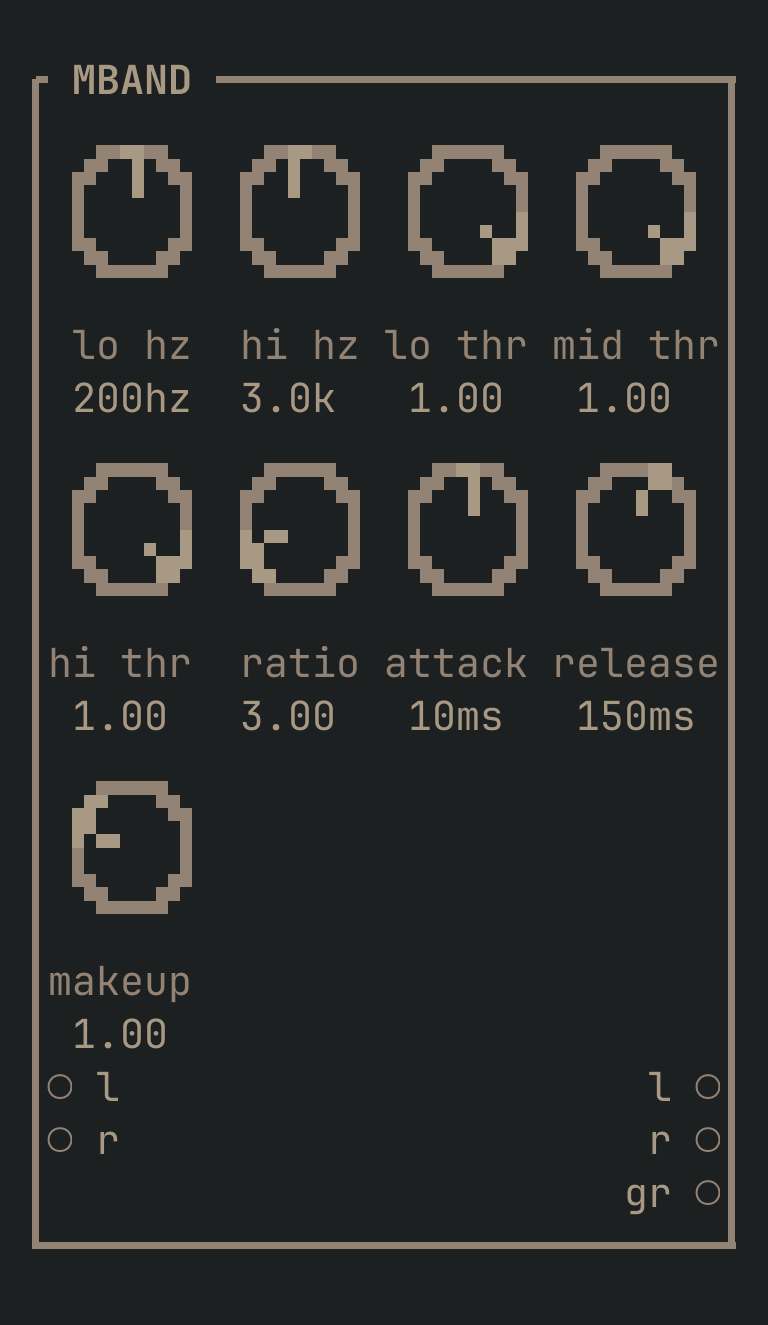 MBANDThree-band dynamics: the glue a single-band compressor cannot do.
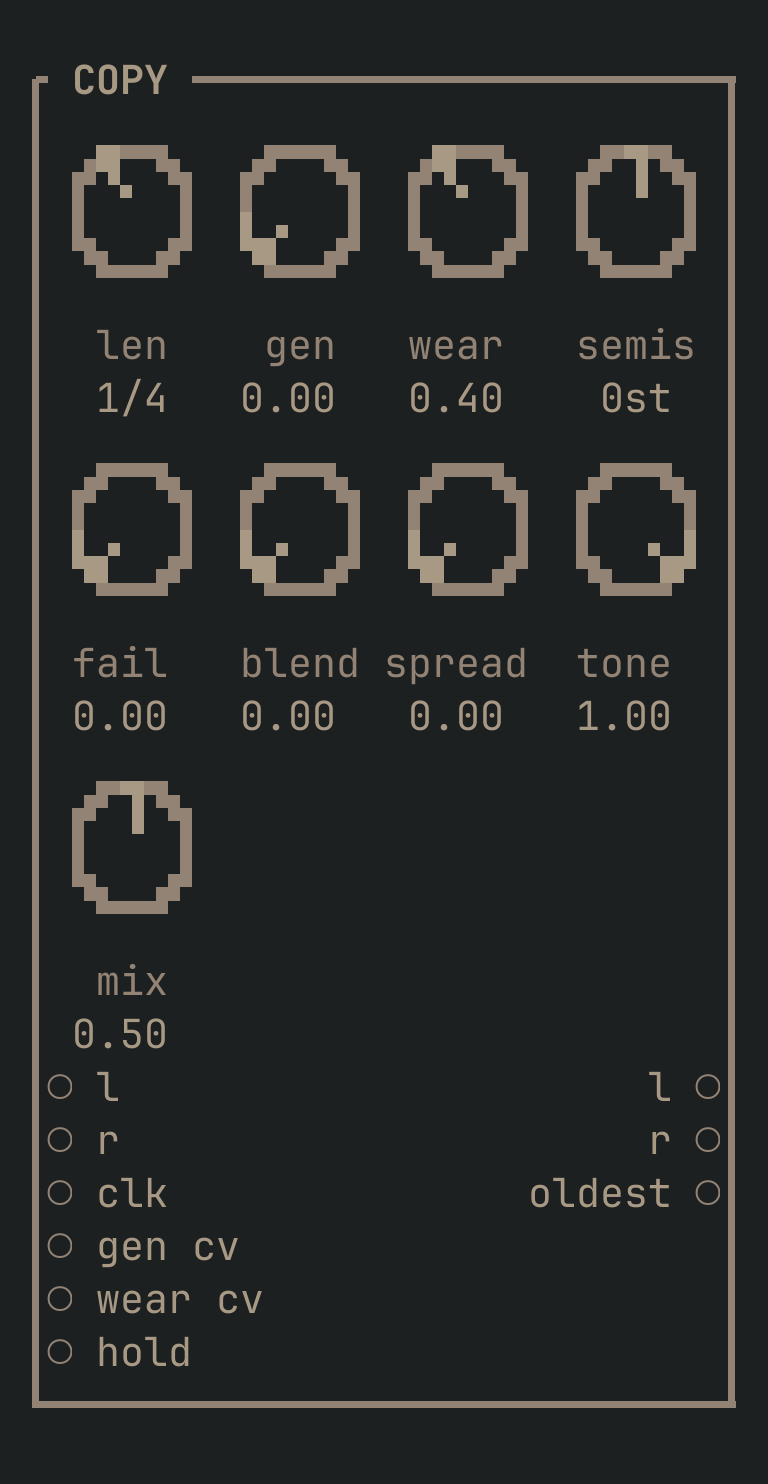 COPYA delay whose axis is GENERATION rather than time.
modulators
They make control voltage that moves something else — envelopes, sample-and-hold, slew, randomness.
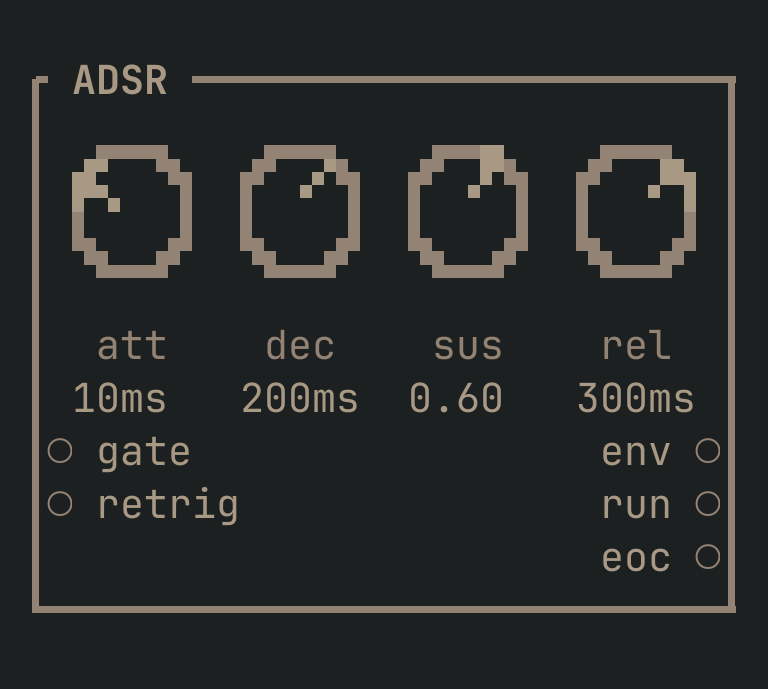 ADSRThe envelope.
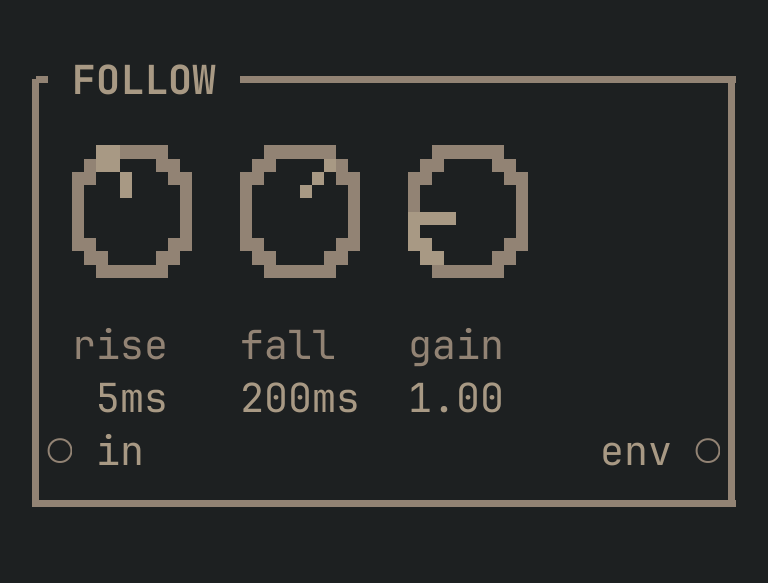 FOLLOWAn envelope follower: turns AUDIO into CV by tracking how loud it is.
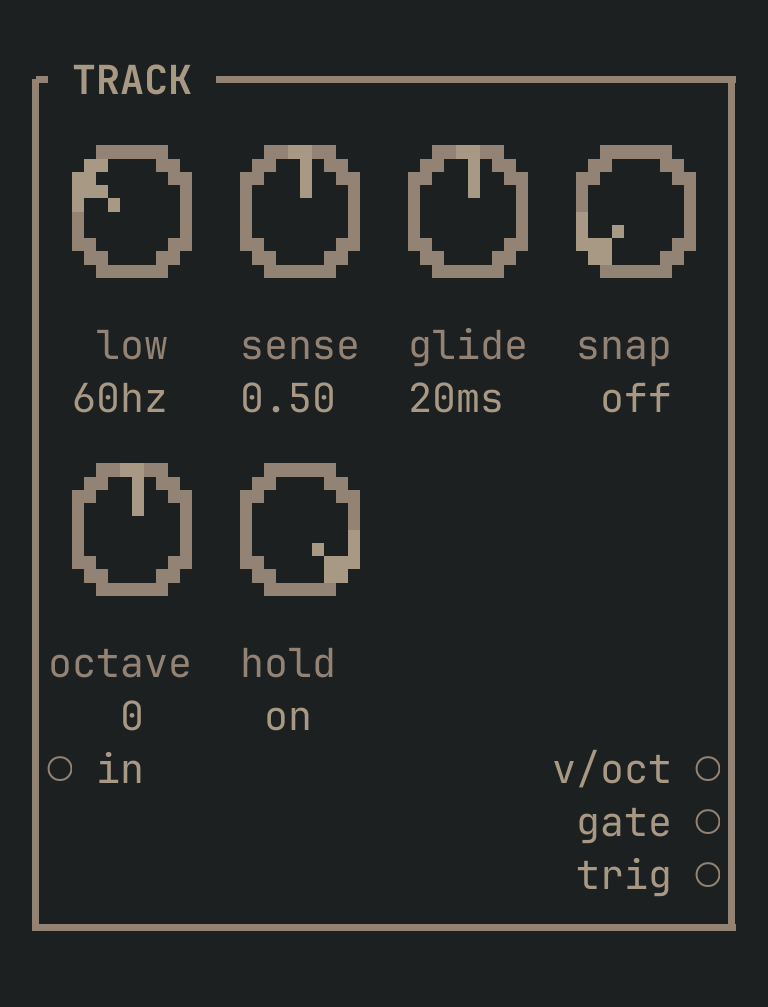 TRACKPITCH TO VOLTAGE — the other half of FOLLOW.
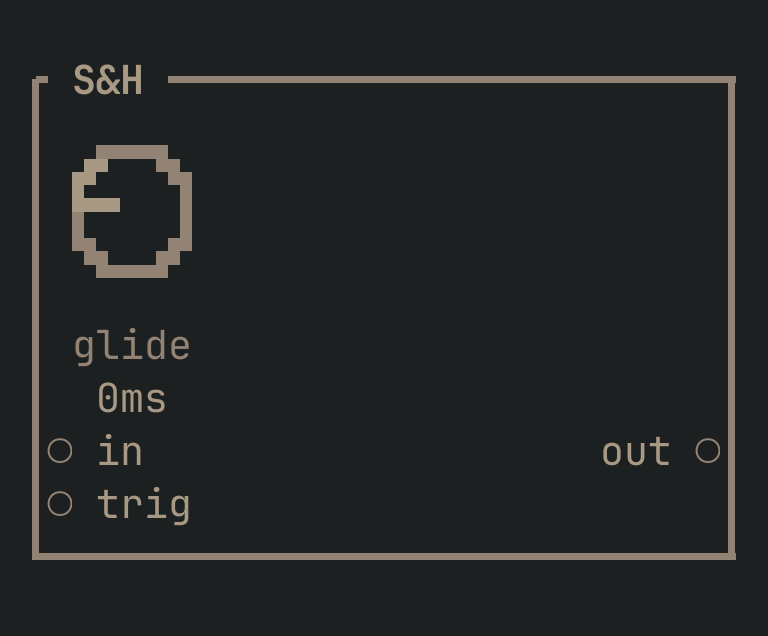 S&HSample and hold.
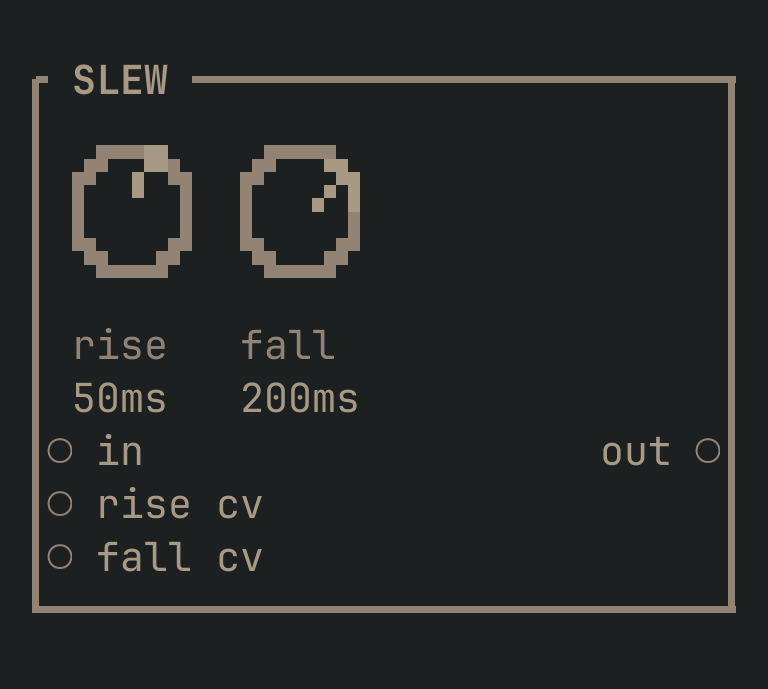 SLEWSmooths a signal: a rise time and a fall time, separately.
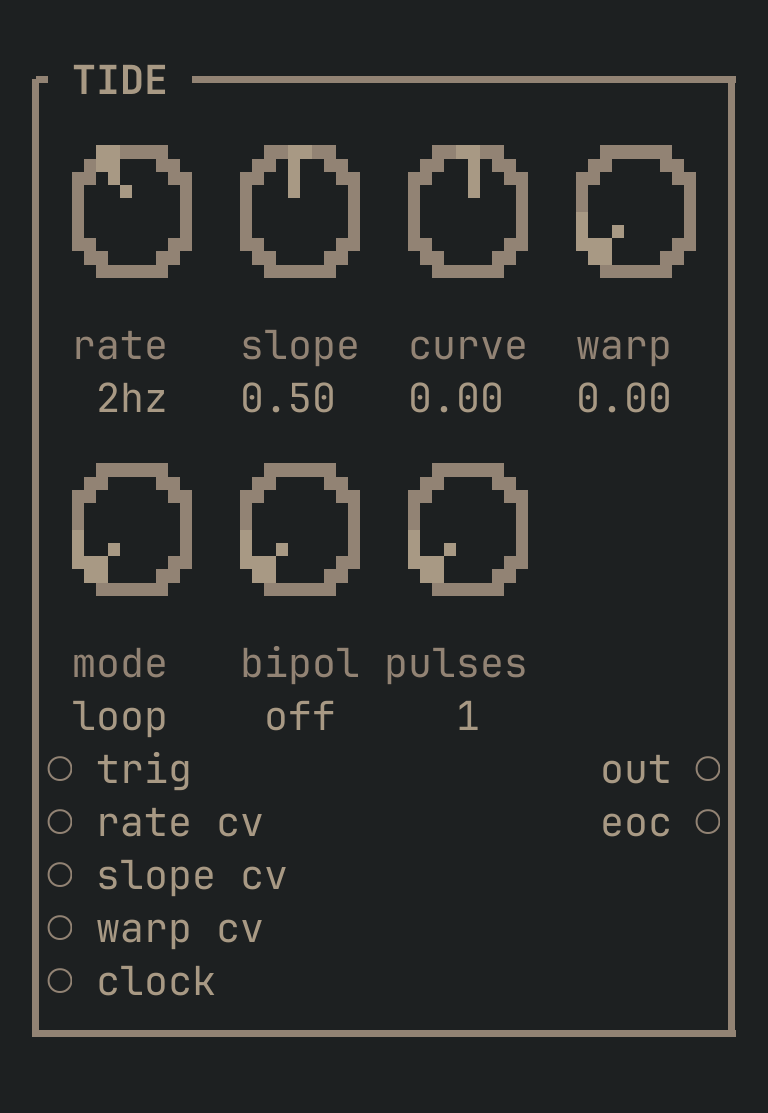 TIDEA function generator that is an envelope, an LFO and an oscillator at once, with the SHAPE on a knob.
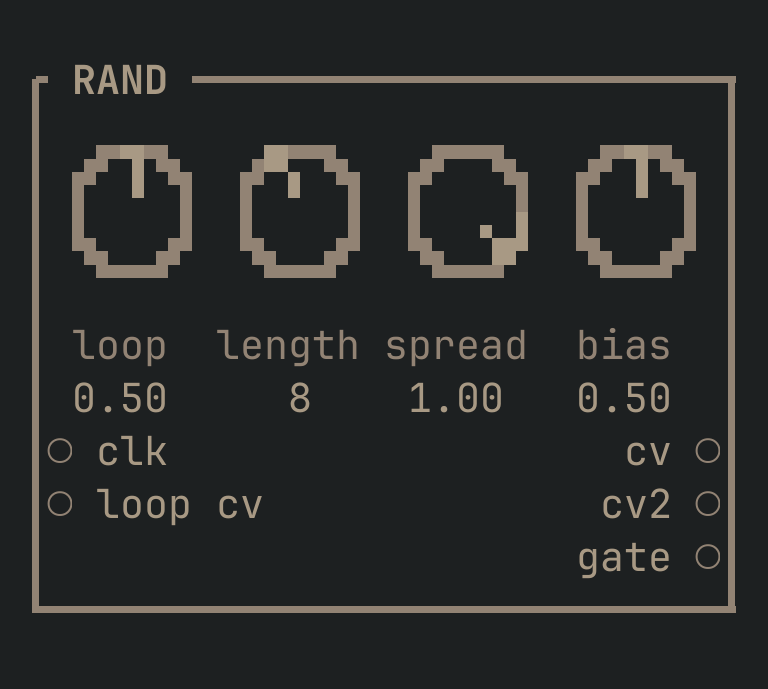 RANDA generative random source you can steer between fresh-every-time and a repeating groove.
utilities
The glue — attenuators, mixers, logic, quantisers, routing, recording, and the way out to MIDI.
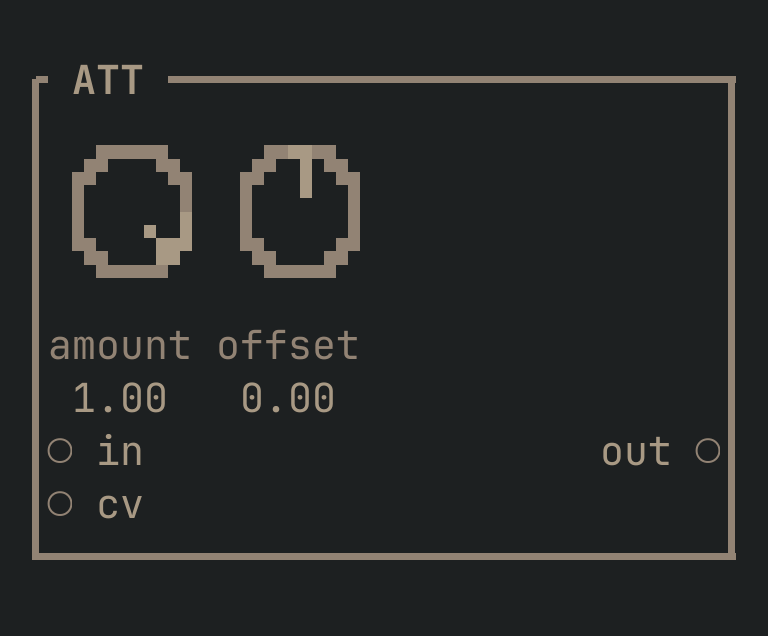 ATTAttenuverter:
 out = in × amount + offset.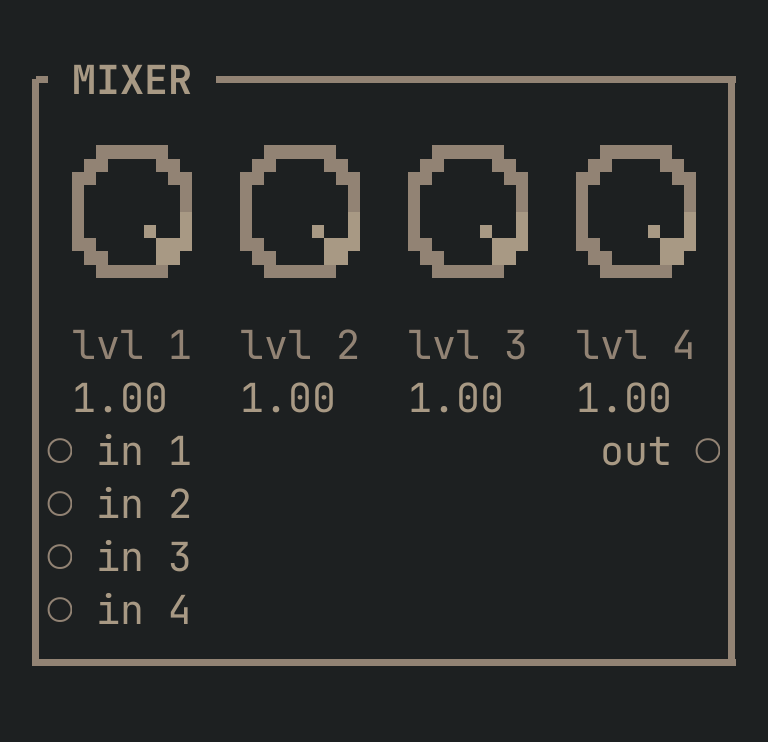 MIXERSums four signals, with a level on each.
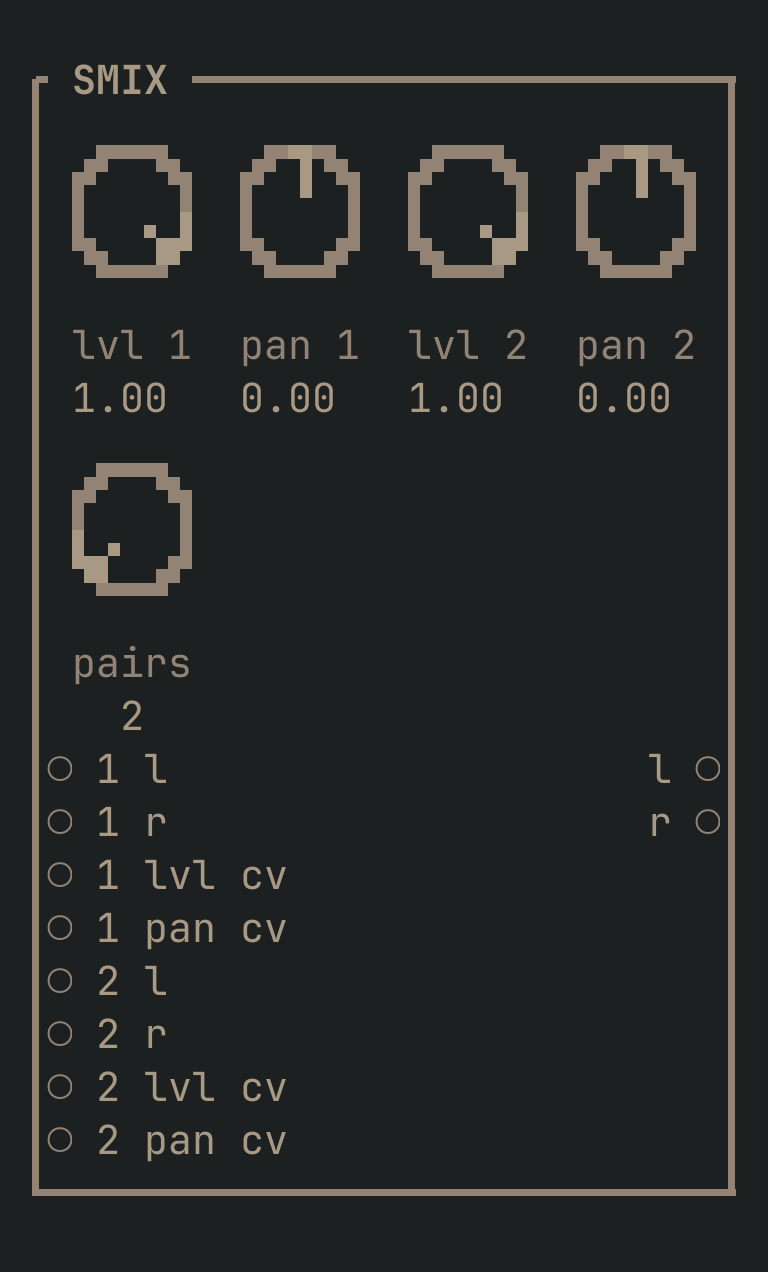 SMIXStereo mixer: up to FOUR stereo channels, each with level and pan under full CV.
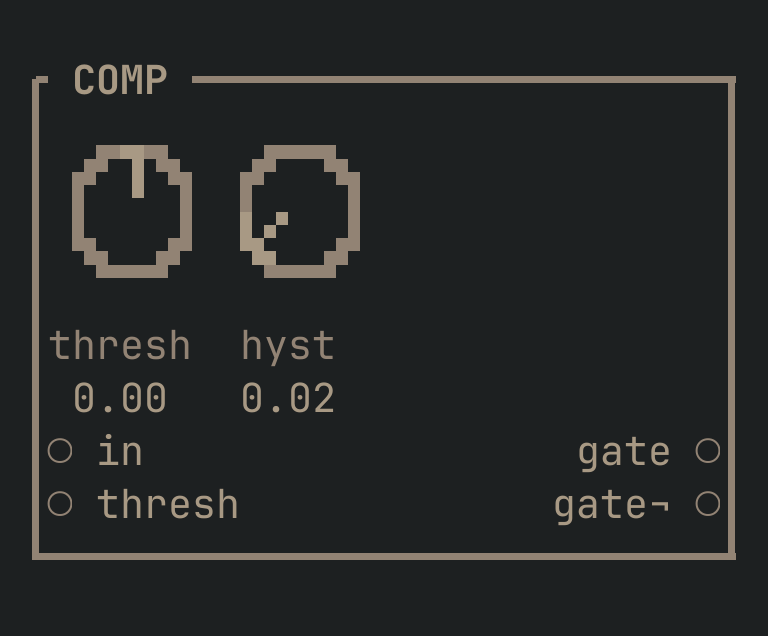 COMPComparator: turns a CV into a gate when it crosses a threshold.
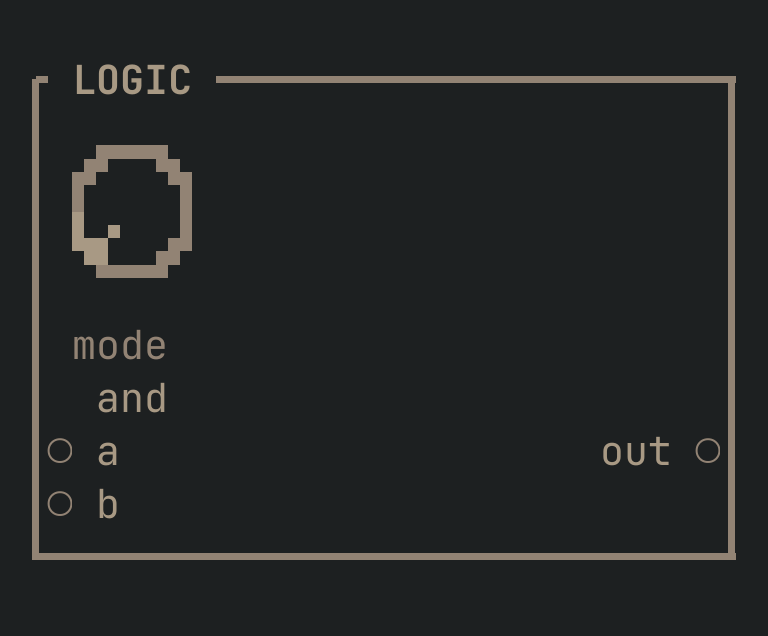 LOGICAND / OR / XOR / NAND on two gates.
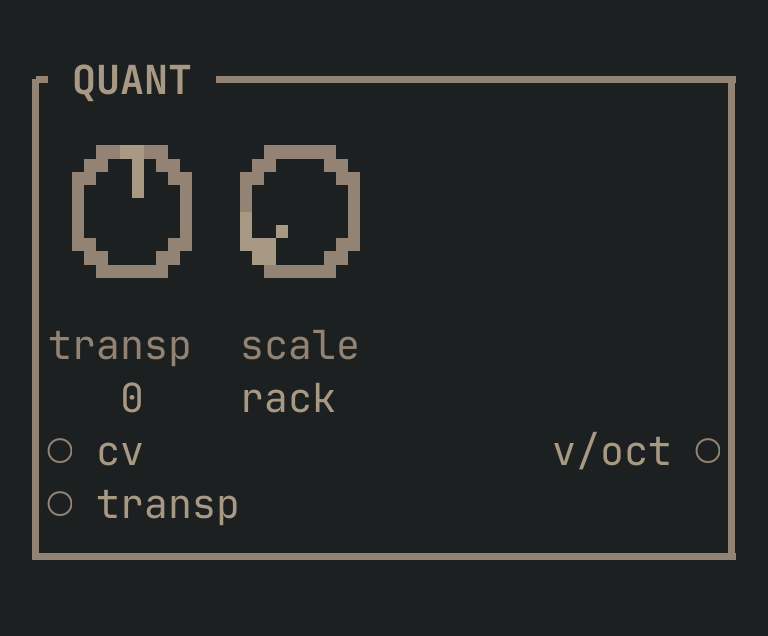 QUANTSnaps any CV to a scale.
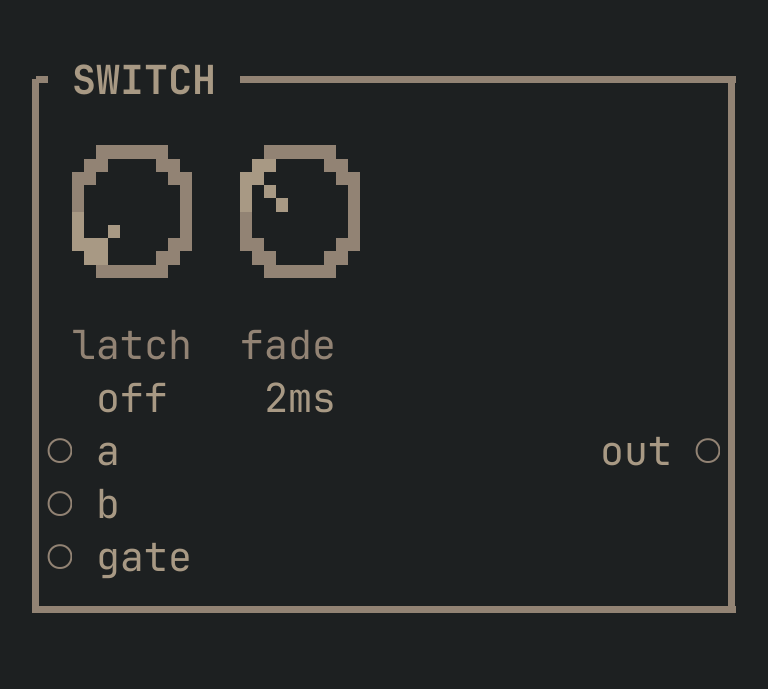 SWITCHA gate turns a signal on and off — or picks between two.
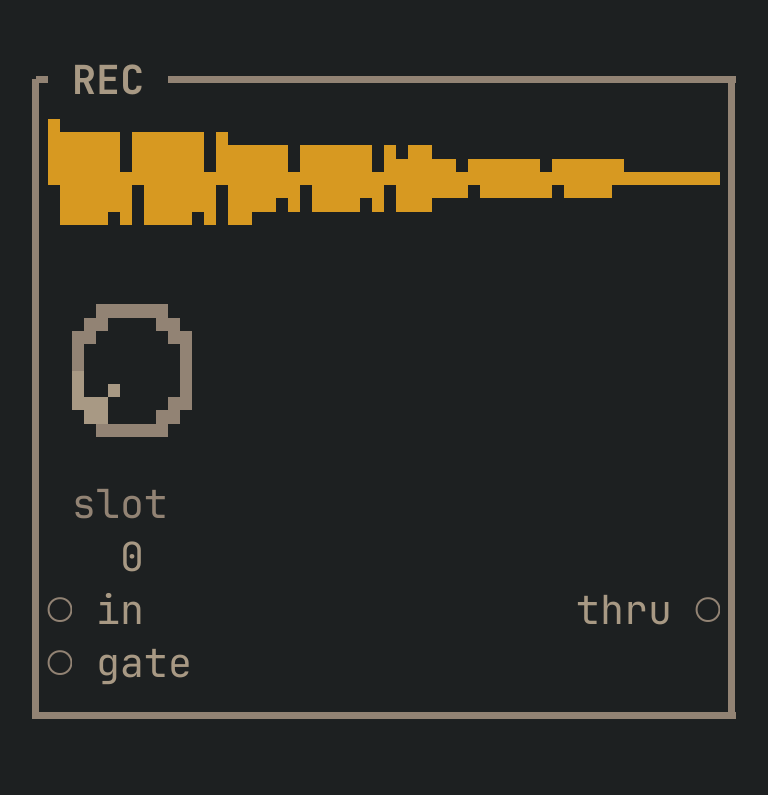 RECRecords whatever is patched into it, for as long as its gate is high, into a sample bank slot.
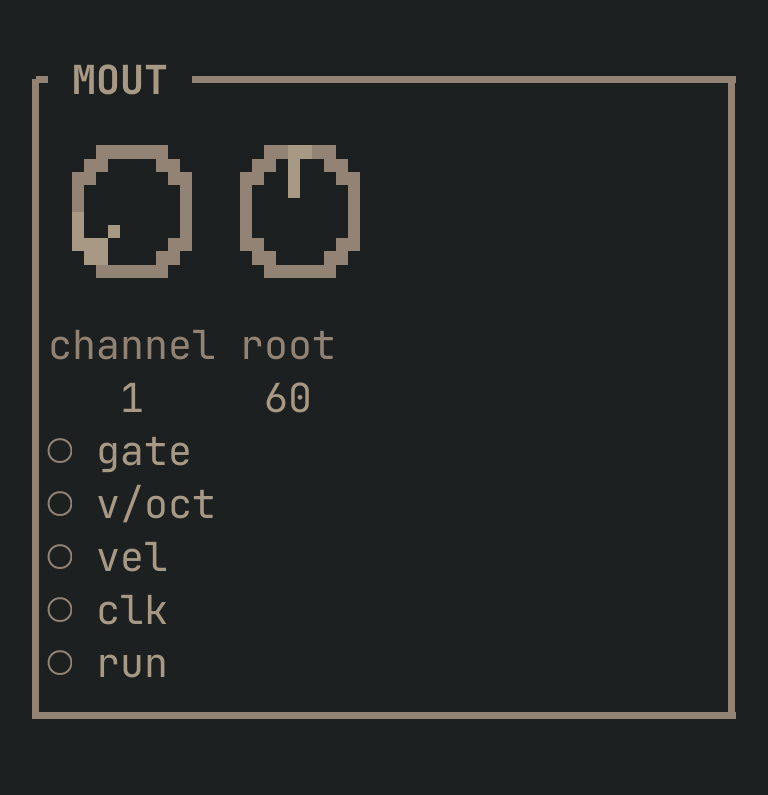 MOUTGate + pitch + velocity, back out as MIDI notes — the rack playing a hardware synth or a DAW.
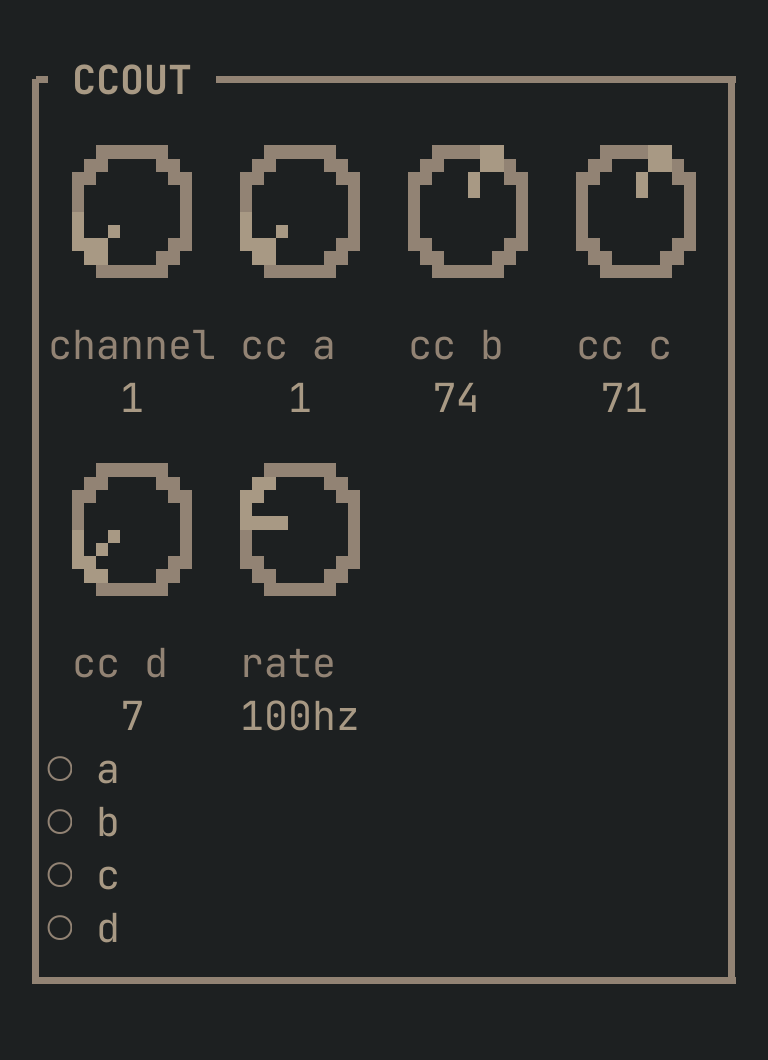 CCOUTFour CV lanes out as MIDI control change — the rack *modulating* a hardware synth, where MOUT plays it.
sequencing
Rhythm and time — the clock, and everything that divides, multiplies, gates or steps off it.
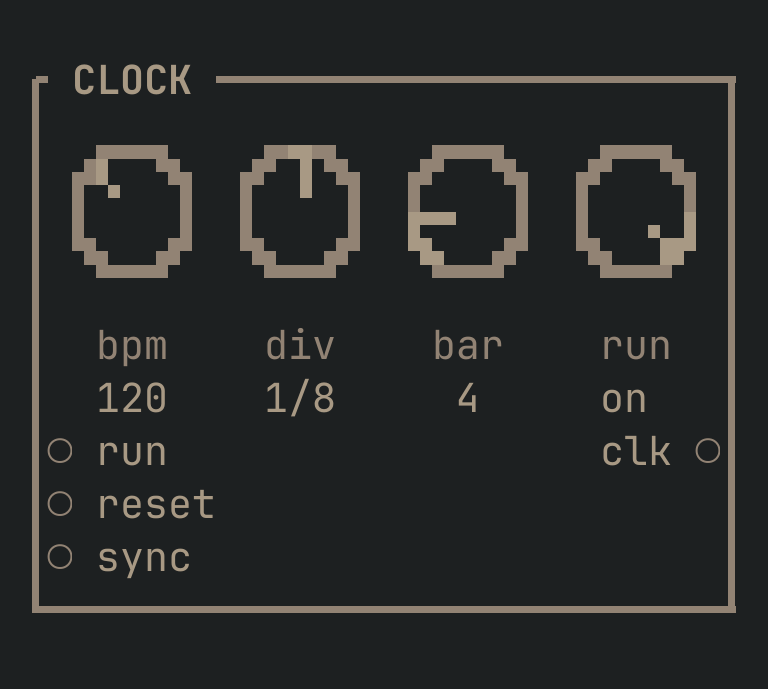 CLOCKThe tempo.
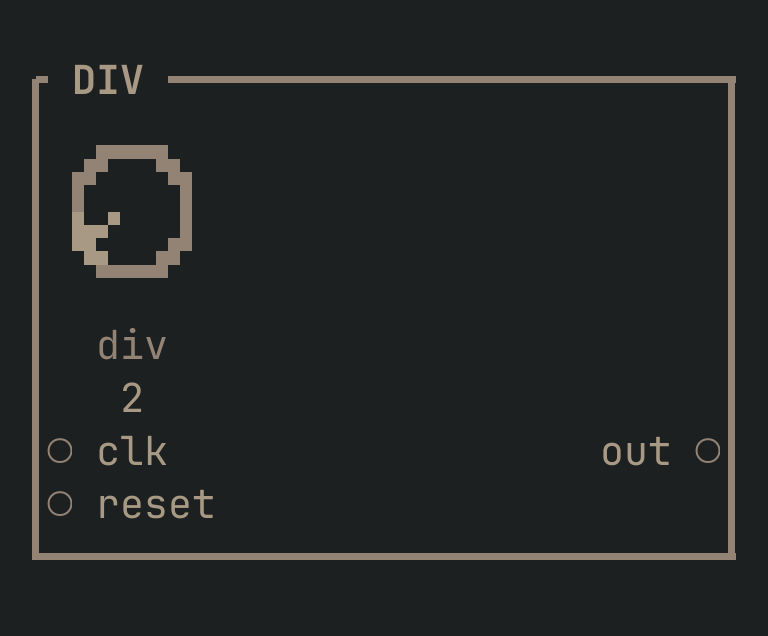 DIVPasses every n-th pulse.
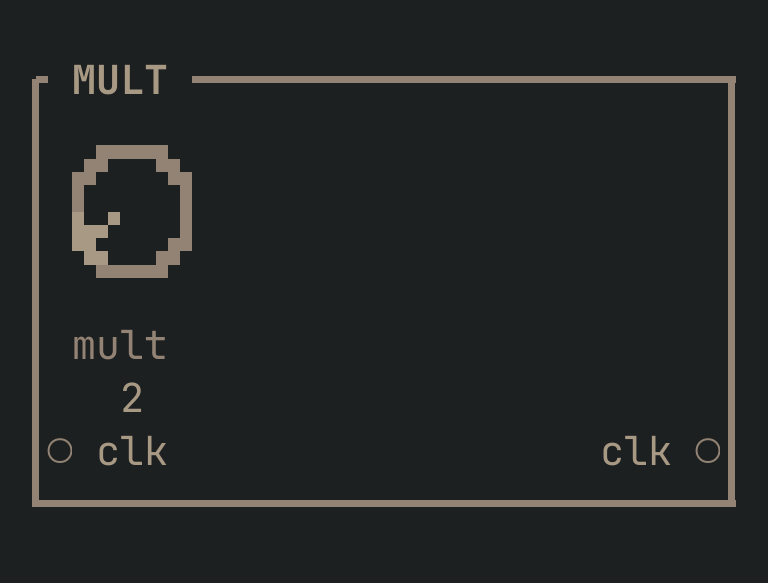 MULTMultiplies a clock: n pulses out for every one in.
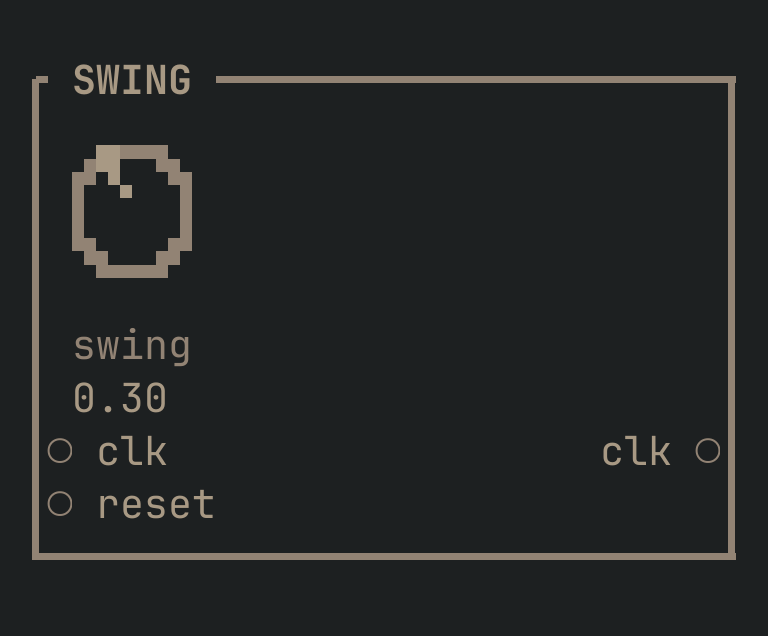 SWINGSwings a clock: delays every second pulse — the 'and' of each beat pair — by a fraction of the beat.
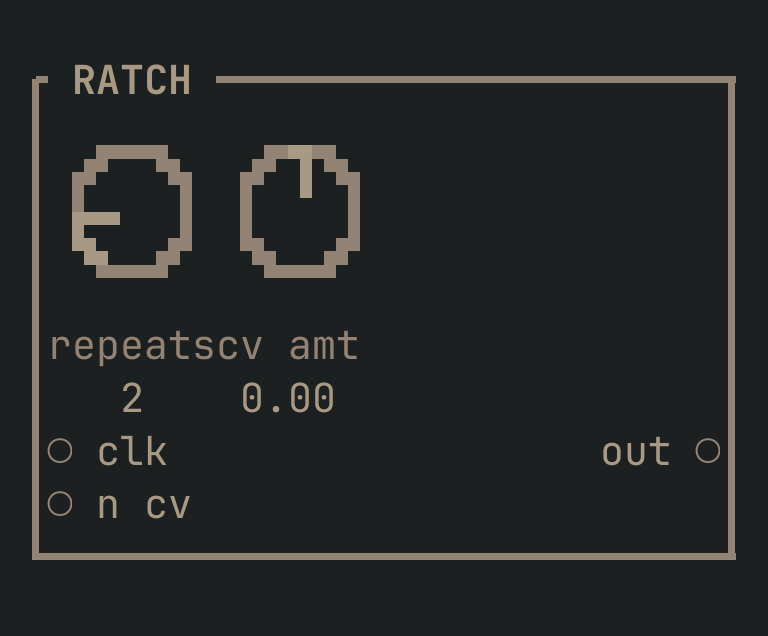 RATCHBursts each pulse into several — the stutter, the roll, the trap hi-hat.
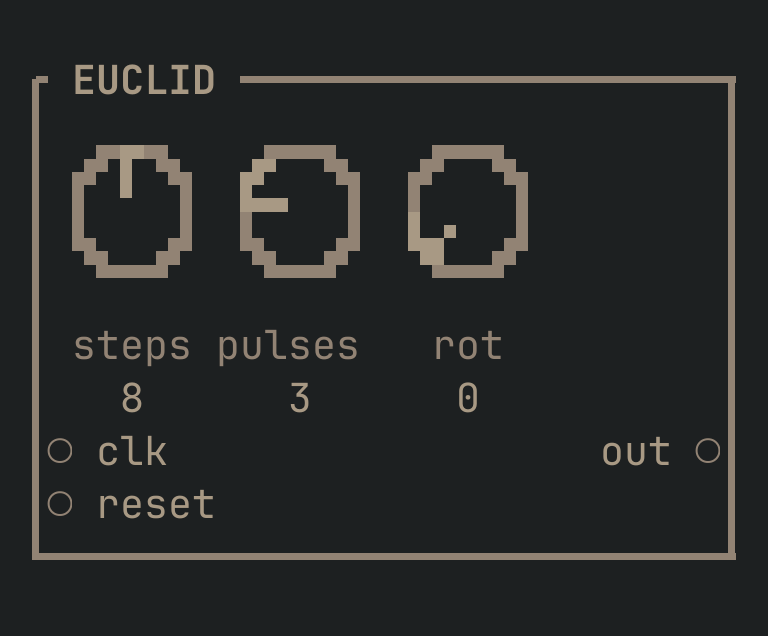 EUCLIDEuclidean rhythm: spreads
 pulses hits as evenly as possible over steps.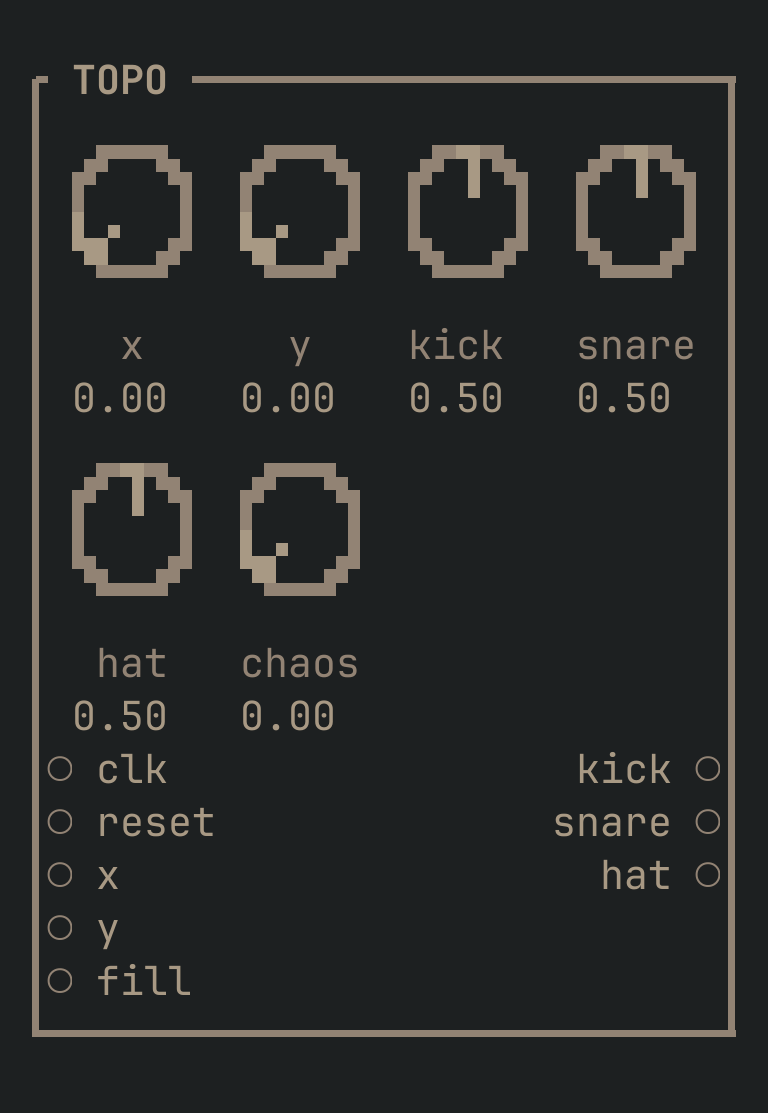 TOPOA drum machine you STEER, not program.
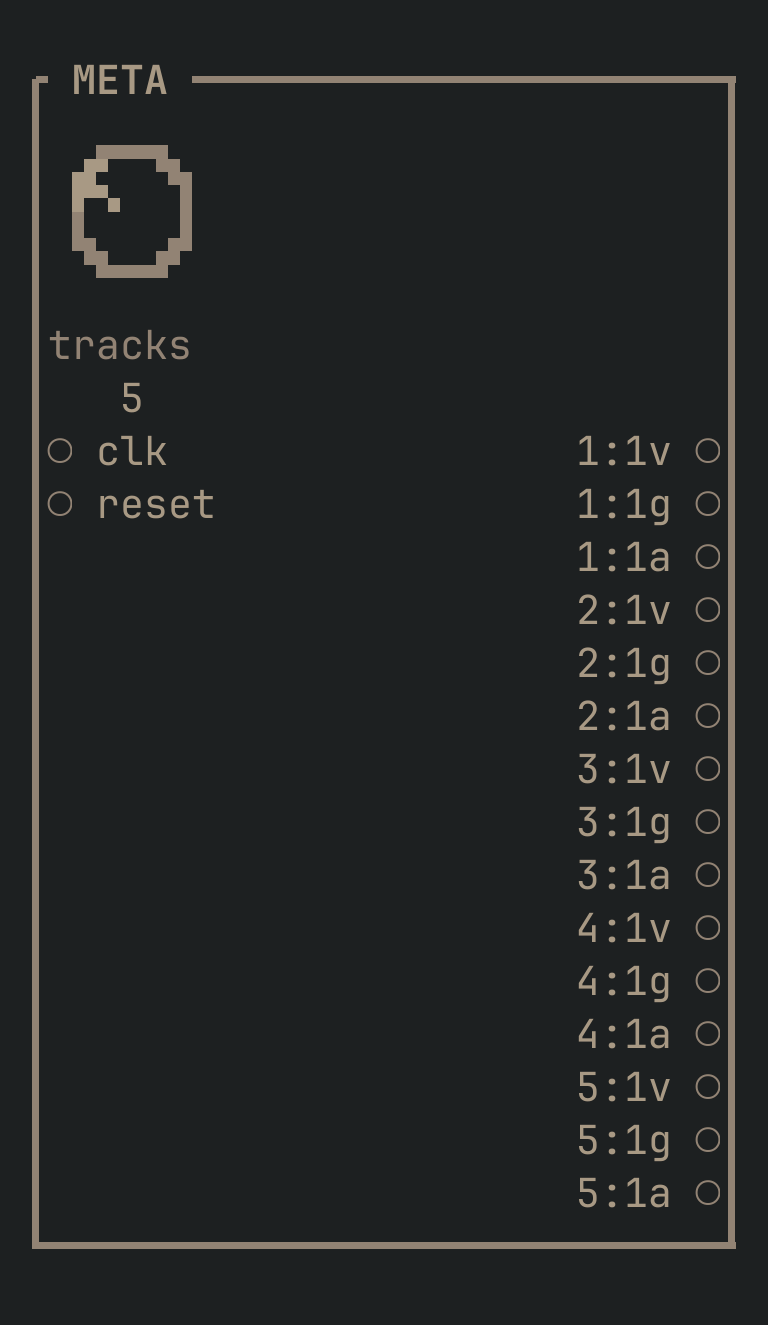 METAThe master rack's ruling sequencer — MASTER-ONLY, with up to EIGHT tracks that reach out into the tabs (
tracks says how many it carries; five to begin with).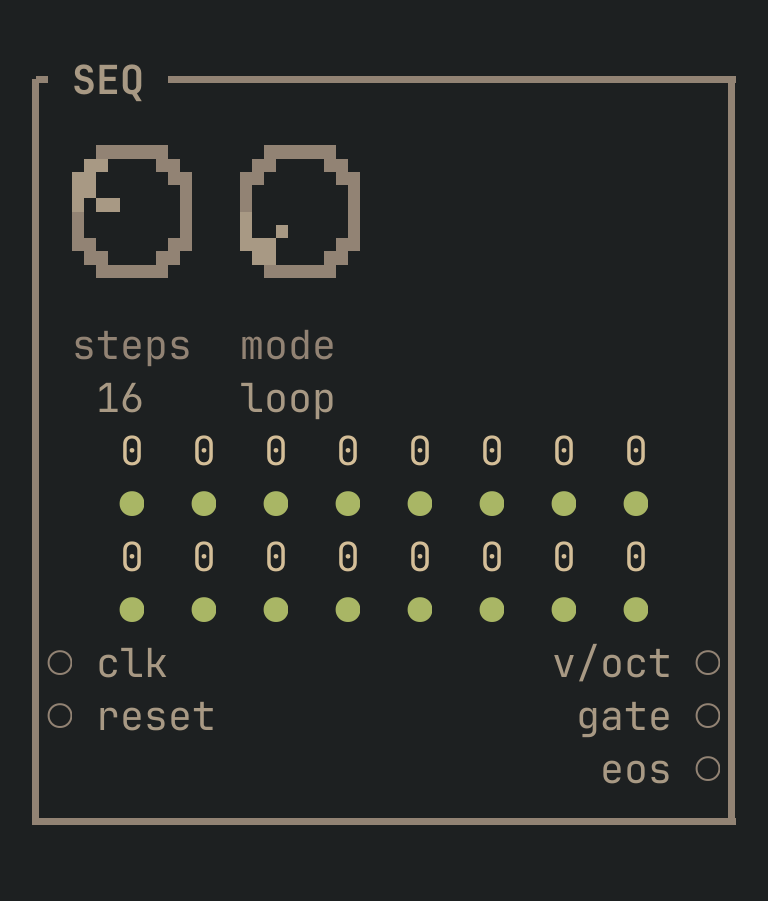 SEQA step sequencer: a pitch and a gate per step, up to 32.
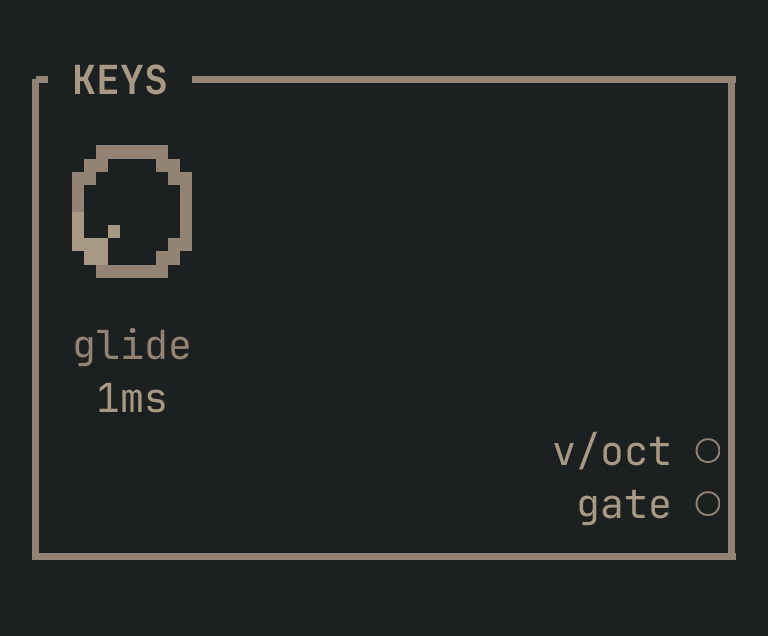 KEYSThe computer keyboard as a playable instrument: pitch CV and a gate.
output
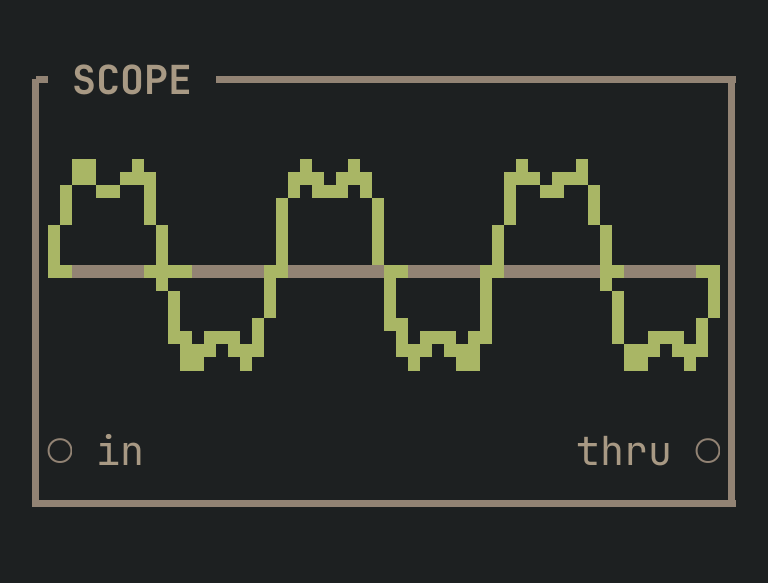
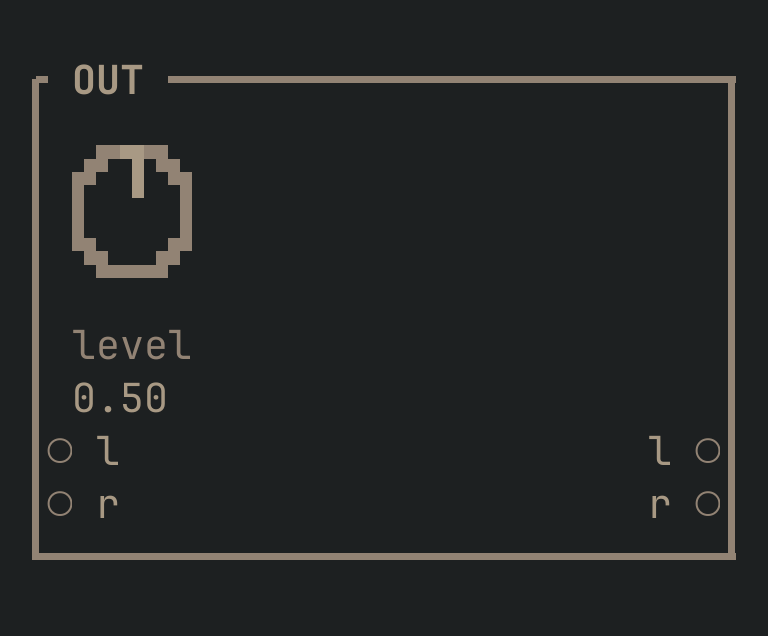
The end of the chain — the scope you look at, and the speakers you hear.